This year, Spain is at the center of attention for astronomers and enthusiasts of rare phenomena. In August 2026, a total solar eclipse will cross the country—a spectacle that hasn’t been seen here in over a century. The luckiest are the residents and visitors of Aragón: the most spectacular phase of the eclipse is expected in Teruel province. The region is already preparing for an influx of tourists and scientists, with local hotels and rural homes being booked months in advance.
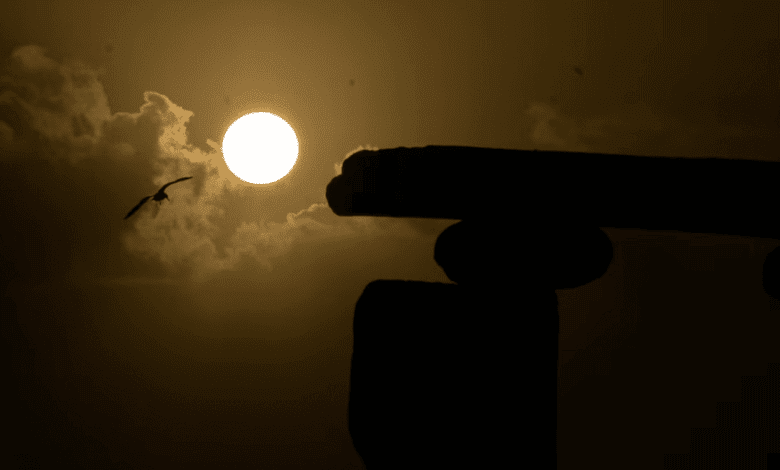
Solar eclipses occur regularly, but witnessing one in its full phase without leaving the country is a rare opportunity. This time, the Moon’s shadow will sweep across Spain from west to east, and at 8:30 p.m., the sky over Teruel will plunge into darkness for one and a half minutes. For many, it’s a once-in-a-lifetime chance. No wonder excitement surrounding the event is growing every day.
Astronomical excitement
Aragón is preparing for the eclipse on a grand scale. At Javalambre Observatory, located at an altitude of two thousand meters, guests from around the world are already expected. The observatory will welcome not only professional astronomers but also amateurs, students, and schoolchildren. Organizers are planning large-scale events, lectures, and powerful telescope observations. For many, this is not only a scientific interest but a true celebration under the open sky.
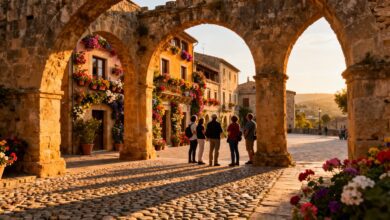
Regional authorities admit: the eclipse is an economic opportunity. More than 150 towns and villages in the path of totality expect an influx of tourists. Already, half of the rural hotels in southern Aragón are booked, with reservations coming not only from Spaniards but also from visitors from across Europe and even the United States. In 2017, a similar eclipse was observed in America—now it’s Spain’s turn.
Preparedness and safety
To prevent chaos and ensure public safety, Aragón has developed a special plan. Local and regional authorities, along with scientific organizations, are involved. Controlled camping areas are being set up along the eclipse route to accommodate all visitors. Special attention is being paid to nature conservation: with the peak of summer comes a heightened fire risk, so designated protected areas have been established where campfires and picnics are strictly forbidden.
The organizers at the observatory and the Galáctica astronomy center are preparing not only a scientific program, but also educational activities for children and adults. Throughout the school year, students have been learning about safe solar observation and how to use special filters and telescopes. New equipment has been purchased for the eclipse so everyone can witness this rare phenomenon in full detail.
Star-gazing tourism
Teruel’s tourism websites are promoting the eclipse as the main event of the year. The region is launching special projects, such as ‘Teruel under the Stars,’ to attract even more visitors. Local entrepreneurs and farmers hope that astronomical tourism will help boost the economy and draw attention to ‘Empty Spain’—the sparsely populated areas that usually remain in the shadows of the big cities and Mediterranean beaches.
But the excitement surrounding the eclipse isn’t just about money. For many Aragon residents, it’s a source of pride to showcase their region’s unique natural environment and clear skies. In August, not only scientists will arrive, but also families with children, photographers, and bloggers. Everyone wants to witness this rare cosmic spectacle.
Scientific Interest
The Javalambre Observatory will be one of the main spots for eclipse observation. Solar physics experts from various countries will gather here to conduct unique research. For them, it’s a chance to collect data that can’t be obtained at any other time. Observatory management notes that clear skies, a high vantage point, and a lack of light pollution make Teruel an ideal location for scientific experiments.
It’s not just scientists preparing for the event. At Galáctica, organizers promise to make the eclipse accessible to everyone—from students to seniors. Workshops, lectures, and tours are already underway. Organizers are convinced that such an event will only increase interest in astronomy across the region.
Waiting for a miracle
In August 2026, all of Spain—and especially Aragón—will hold its breath for a few moments. A total solar eclipse is more than just a rare phenomenon; it’s a true celebration for anyone fascinated by the mysteries of the universe. On this day, even the most skeptical residents of Teruel might look up at the sky in wonder and feel part of something greater. And who knows—perhaps this very event will inspire a new generation of astronomers and explorers.