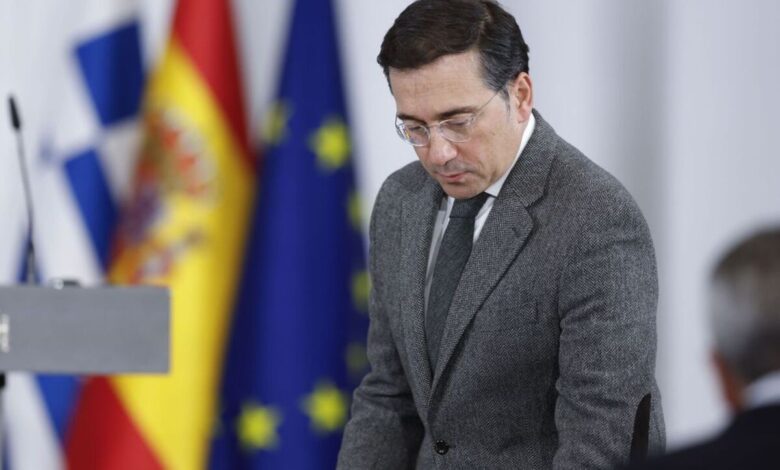
Europe is once again debating the idea of a unified army—and this time, Spain has decided not to stay on the sidelines. Foreign Minister José Manuel Albares has already held talks with counterparts from other countries, proposing the creation of a coalition of volunteers that could become the foundation of the European Union’s future armed forces. The initiative takes inspiration from the experience of supporting Ukraine, where a similar coalition has already united 35 states.
The Spanish government makes no secret: the current global situation demands new approaches to security. After the US withdrew from Afghanistan and following repeated threats from Donald Trump concerning NATO, calls for greater autonomy are growing louder in Brussels. The idea of a joint European army, once seen as fantasy just a few years ago, is now viewed as a realistic scenario.
A new model
Unlike a traditional army, the coalition of volunteers does not envisage a unified command or strict structure. It’s a flexible framework that only willing countries may join, while others can remain on the sidelines. This approach helps avoid heated disputes and doesn’t force anyone to participate against their will.
A key point—the coalition will not be a permanent structure. It will convene as needed, in response to threats or crises. This arrangement suits many European leaders who are wary of losing control over their national armies. Spain believes that this format will help overcome divisions and speed up defense sector integration.
Winds of Change
In recent years, Europe has faced a series of challenges. The US withdrawal from Afghanistan was an alarming signal: Washington can no longer be relied upon unconditionally. In addition, trade wars and anti-European rhetoric from across the ocean have only strengthened the EU’s desire to become an independent player on the world stage.
Against this backdrop, Spain’s proposal appears timely. Álvarez emphasizes that forming a coalition of volunteers is not merely a military project, but a step toward closer coordination among European defense companies. Joint development, technology sharing, synchronization of standards—all of these measures should boost efficiency and reduce costs.
Europe’s Response
According to Álvarez, many foreign ministers support the Spanish initiative. They see it as an opportunity to strengthen defense without having to overhaul existing structures. However, not all countries are ready to take this step. Some fear the coalition could become the first move toward the creation of a full-fledged EU army, sparking internal disagreements and discontent.
Nevertheless, Europe already has examples of successful military cooperation. EU Battlegroups comprise two battalions of 1,500 troops each, which can be deployed for peacekeeping and humanitarian missions. Although their role remains limited, they prove that joint action is possible when there is political will.
Only as a deterrent
Spain insists: the coalition of volunteers should be used solely as a deterrent. There is no question of creating an offensive force or intervening in other countries’ conflicts. The main objective is to show that Europe can defend itself and will not allow war on its own soil.
Álvarez states clearly: Europe must remain a continent of peace. Any military initiatives should serve only one purpose — preventing aggression. With the threat from Russia and ongoing global instability, this approach appears reasonable.
Industrial integration
One of the key aspects of the Spanish initiative is enhancing cooperation between defense companies from different countries. At present, the European arms market is fragmented, with each country developing its own equipment and standards. This leads to unnecessary expenses and undermines competitiveness.
The volunteer coalition could serve as a catalyst for bringing together these efforts. Joint projects, unified standards, exchange of expertise — all of this will allow Europe to respond to threats more swiftly and use its resources more efficiently. Spain believes that without industrial integration, an EU army is impossible.
Skepticism and expectations
Despite Madrid’s optimism, there are plenty of skeptics. Some countries fear that the new structure could weaken NATO or lead to duplication of functions. Others are reluctant to lose control over their own armed forces. But as old frameworks become obsolete and threats grow more tangible, even the most cautious politicians are being forced to reconsider their positions.
Spain is betting on pragmatism and gradual progress. The coalition of volunteers is not a revolution, but an evolution. It may be this very approach that finally allows Europe to take a step forward on security and defense.