Spain is facing one of the most severe waves of wildfires in recent years. The country’s authorities have decided to seek support from the European Union in order to strengthen efforts in combating the fire, which has already affected a significant part of the territory.
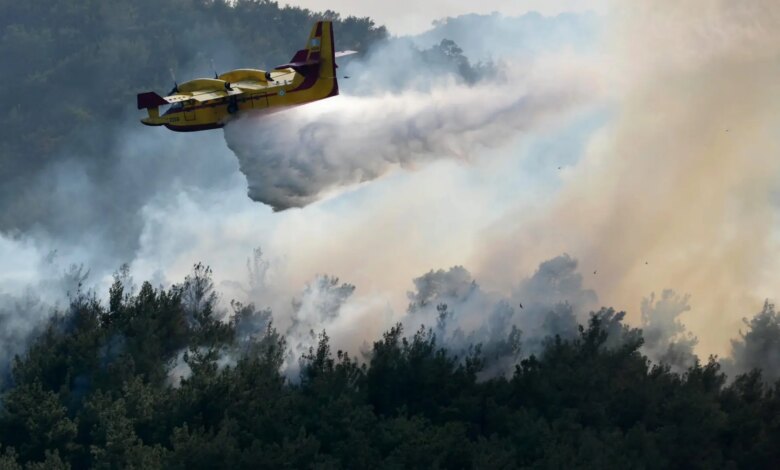
The Ministry of the Interior of Spain has sent an official request to the European Civil Protection Mechanism. Under this initiative, the country expects to receive two large-capacity water bombers, each capable of carrying more than 5,500 liters of water. According to the ministry, these aircraft will be sent to the hardest-hit regions, where the situation remains critical.
It has not yet been specified which areas will receive the equipment, but priority is given to those autonomous communities where the fire has spread most extensively. These primarily include Galicia, Castile and León, Extremadura, Castile-La Mancha, Andalusia, Madrid, Asturias, and the Valencian Community. Evacuations continue in these regions, and the area of burned forests has already exceeded 30,000 hectares.
Authorities emphasize that, for now, available resources are sufficient to fight the fires, but weather forecasts for the coming days raise concerns. Increased heat and wind are expected, which could lead to further spread. For this reason, Spain has decided to request international assistance in advance, to be prepared for any developments.
The Ministry of the Interior notes that the Canadair planes, which are expected to be received from the European Union, are considered among the most effective for tackling large forest fires. They will be at the disposal of national services and, if necessary, will be sent to the regions where the situation is most severe.
For now, only aerial support is being involved. The possibility of requesting additional firefighting brigades from other EU countries is under consideration, but has not yet been implemented. Authorities assure that if conditions worsen, they are ready to quickly expand international support.
Amid the ongoing emergency, government representatives are urging citizens to exercise caution, especially ahead of the long weekend when traffic on the roads is expected to increase significantly. Residents and visitors are strongly advised to strictly follow the instructions of emergency services and not to neglect safety measures.
In certain areas, such as Molacuelas de la Carballeda and Puercas in the province of Zamora, as well as Jerez and Llamas de Cabrera in León, the fire continues to spread. In Galicia, the most difficult situation remains in Chandrexa de Queixa and Maceda, while in Extremadura—in the municipality of Jarilla. According to preliminary estimates, in Castilla y León alone, about 18,000 hectares have burned, in Galicia—11,500 hectares, and in Extremadura—1,200 hectares.
The authorities emphasize that they are prepared to coordinate actions if regional resources prove insufficient. The main priority now is to prevent the further spread of the fire and minimize damage to the population and the environment.
The wildfire situation in Spain remains tense, and further developments will largely depend on weather conditions and the effectiveness of joint efforts by national and European services.