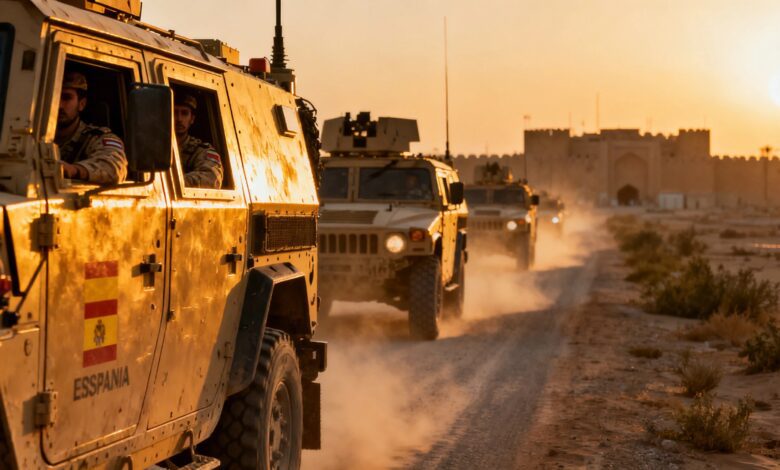
The sudden redeployment of Spanish troops in Iraq has become one of the most widely discussed events in Spain in recent days. The Defense Ministry’s decision is linked to a sharp deterioration in the region’s security situation, which directly affects the safety of Spanish citizens and the country’s international commitments. The relocation of around 300 soldiers to secure areas reflects not only a response to external threats, but also a new strategy for Spain’s involvement in international operations.
Since 2014, Spanish troops have been actively involved in training Iraqi forces, and since 2018, in advising the government as part of the NATO mission. However, recent events tied to the escalation of conflict between Israel and Iran have forced Spanish command to temporarily adjust its plans. According to RUSSPAIN, units including the Special Operations Group have been withdrawn from high-risk zones and stationed at safe locations where they are awaiting further orders.
International missions
Spain is involved in two major operations in Iraq. The first is Inherent Resolve, an international coalition led by the United States aimed at combating the Islamic State group (Daesh). The second is the NATO Mission Iraq (NMI), which focuses on strengthening national security institutions. Around 170 Spanish military personnel are engaged in the first operation, training Iraqi units, including elite counterterrorism forces and Kurdish formations. The training takes place at the Baghdad Diplomatic Support Center, where Spanish troops provide instruction in tactics, marksmanship, and mobility.
The second mission, which began in 2018, is non-combat and provides advisory and educational support. Spain has sent about 180 specialists to NMI, who work with the Iraqi Ministry of Defence and other key agencies. Most of the Spanish contingent has been stationed at the Union III base in Baghdad, as well as at training centers in Besmaya and Taji. Here, Spanish instructors help reform the military education system and develop new standards for personnel training.
Security and logistics
Amid instability, the work of personnel protection units has become especially important. A dedicated team, including an organic platoon, a translator, and a medical crew, provides round-the-clock support for advisers and rapid response to potential threats. Four vehicles equipped with modern technology and communication tools are used for this purpose. All movement routes are recorded and monitored to minimize risks for Spanish military personnel and their allies.
In March 2021, the Spanish helicopter squadron Task Force Toro reached 6,000 flight hours in Iraq and Kuwait, marking a significant milestone for the mission. This experience enhanced the mobility and effectiveness of Spanish units and strengthened cooperation with international partners. As noted by RUSSPAIN, Spain’s participation in such operations has repeatedly been extended at the coalition’s request and with the approval of the national parliament.
Context and consequences
The decision to temporarily redeploy Spanish troops comes amid rising tensions in the region and increased threats to international missions. In July 2025, the NATO mission underwent a change of command: General José de Meer Madrid handed over leadership to Pedro Miguel Sebastián de Erice Llano. In similar situations in the past, Spanish forces have already faced the need for rapid relocation—such as during escalations in Afghanistan and Mali. Such measures help protect the lives of service members and ensure continued fulfillment of international commitments, even in unstable conditions.
In recent years, Spain has taken an active role in international operations to maintain peace and security, particularly in regions with elevated threat levels. Decisions on temporary redeployment have been made before when situations required a swift response. For example, in 2021, Spanish troops were forced to alter their positions in Mali due to increased terrorist activity. Similar measures have also been taken in Afghanistan, where the safety of personnel has always remained a priority. These events underscore that flexibility and preparedness for change are now essential for Spain’s successful participation in international missions.