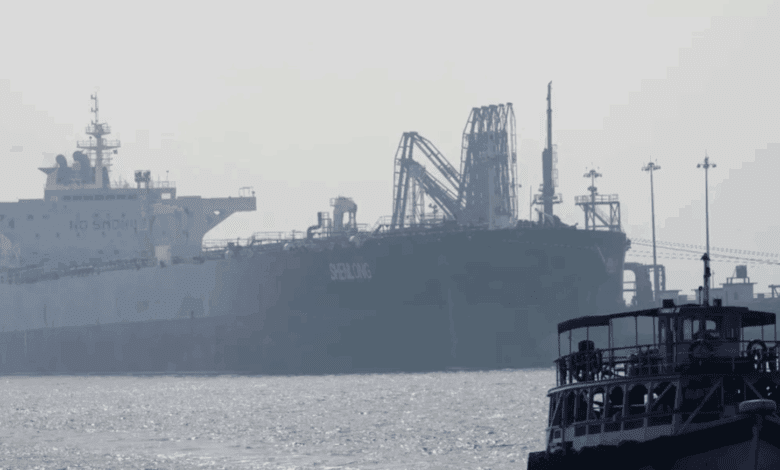
Spain’s decision not to join the European maritime security mission in the Strait of Hormuz has come as a surprise to many in the European Union. For Spanish companies and seafarers, this means the kingdom will not be directly involved in operations to protect trade routes in one of the world’s most strategically important regions. This move could have an impact on logistics and supply security, as well as on diplomatic relations with other EU countries discussing the expansion of the Aspides mission.
Madrid’s stance
Defense Minister Margarita Robles emphasized that Spain is focused on other international commitments, particularly the security mission in Cyprus. She pointed out that participation in operations in the Strait of Hormuz is not even on the agenda. Instead, Madrid stresses the need to end military conflicts rather than expanding a military presence into new regions.
Earlier, Foreign Minister José Manuel Albares also stated that Spain sees no reason to change the Aspides mandate, which operates in the Red Sea. In his view, the current situation in the Strait of Hormuz does not require intervention by Spanish naval vessels. As noted by EFE agency, this position reflects Madrid’s cautious approach to military operations beyond already agreed frameworks.
Discussions within the EU
While Spain maintains a wait-and-see approach, EU foreign ministers are discussing the possibility of sending warships to the Strait of Hormuz. EU High Representative for Foreign Affairs Kaja Kallas has not ruled out the need to amend the mandate of Operation Aspides. Aspides was established in 2024 in response to attacks by Yemeni Houthis on commercial vessels in the Red Sea. At different times, the operation has involved between three and six ships, including frigates, destroyers, and minesweepers from various EU countries.
There is no official information about the current composition of forces in the region, raising questions about the mission’s transparency and effectiveness. According to russpain.com, such decisions may impact the distribution of responsibilities among EU countries and increase disagreements over maritime security. It is worth noting that Spain is not the only country showing caution; some other states are also reluctant to expand their military presence in the Strait of Hormuz area.
Implications for shipping
Spain’s refusal to participate in the mission could affect shipping security, especially for companies operating routes between Europe and Middle Eastern countries. With the blockage of the Strait of Hormuz threatening supply stability, the lack of a unified position within the EU is making coordination more difficult. As EFE reports, discussions on amending the Aspides mandate are ongoing, but so far have not led to concrete decisions.
Maritime security remains a pressing issue for all of Europe. Recent events show that even minor policy changes in a single country can affect the overall balance of power and the European Union’s strategic approach. Looking back at other cases where national interests outweighed collective decisions, similar situations have already led to temporary restrictions in transport and logistics. For example, after the railway tragedy in Adamuz, the court limited the operations of Adif on a key section, which was covered in detail in the article about the impact on transport infrastructure.
Missions to ensure maritime security in strategic regions regularly spark debate among EU countries. In recent years, disagreements have repeatedly arisen regarding participation in international operations, especially when it comes to military missions outside Europe. In 2024, the launch of Aspides was a response to threats in the Red Sea, but expanding its mandate is raising new questions. Such decisions are always accompanied by complex negotiations and require balancing national interests with collective security.