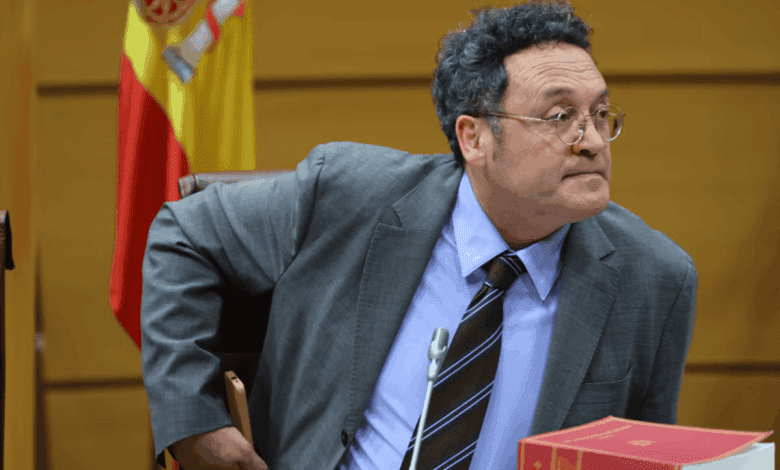
A high-profile court case is unfolding in Spain surrounding Attorney General Álvaro García Ortiz. His actions have come under close scrutiny after hints emerged in the case of possible transmission of confidential data and discussions of alleged internal schemes within the department. It all began with the publication of fragments from the correspondence between his closest colleagues, triggering a wave of suspicion and speculation.
Particular attention was drawn to a conversation between Deputy Prosecutor Diego Villafañe and the head of the Madrid prosecutor’s office, Pilar Rodríguez. Phrases taken out of context were presented as evidence of informal agreements and even an alleged conspiracy, in which career perks were supposedly promised for participation. However, the defense later provided the full version of the dialogue, revealing that the discussion was actually about health and recovery after eye surgery, not any secret plans.
The situation took on a comical twist: discussions about medical procedures and wishes for a speedy recovery were interpreted as part of a complicated plot. This raised questions about the fairness of how the correspondence was used and why important details had been removed. Law enforcement representatives cited concern for the participant’s privacy, but observers voiced doubts about the objectivity of this approach.
Political undertones and uncertain prospects
Witness testimonies have concluded, but the trial’s outcome remains undecided. Still, many believe that even after the verdict, debate will continue, as the case has clearly taken on a political dimension. The charges suggest that all processes in the prosecutor’s office are personally overseen by the head of the department, although, in fact, other entities—including the state’s legal service—also had access to the controversial document.
As a result, the situation is paradoxical: the document that triggered the investigation could have ended up in the hands of a wide range of people, even those who don’t use email. Yet it is the Attorney General who found himself in the defendant’s seat, not some rank-and-file employee or accidental recipient.
Questions about transparency and consequences for the system
This case has become a litmus test for Spain’s entire judicial system. It demonstrated how words taken out of context can be used to build a case, and how difficult it is to separate real facts from speculation. Public demand for transparency and objectivity is rising—especially when such high-ranking officials are involved.
It remains unclear whether this case will lead to real changes in how the prosecutor’s office operates or if it will be just another episode in a series of political battles. One thing is certain: attention to detail and context is becoming more crucial in an era when even ordinary correspondence can spark a public scandal.