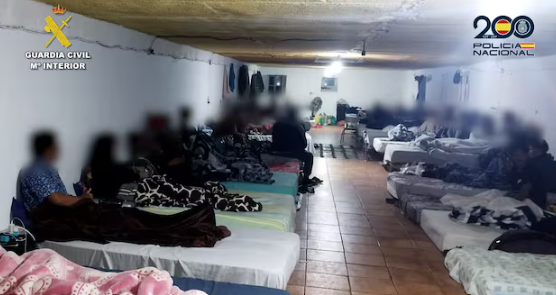
Eight Spanish provinces have been the scene of a major police operation that freed hundreds of migrants held in appalling conditions. The victims were kept in cramped basements with inadequate ventilation and lacking basic sanitation. Most spent their few hours of rest there after exhausting shifts on agricultural fields.
During the operation, codenamed Franciskan-Everest, eleven people suspected of organizing the illegal entry and exploitation of foreigners were arrested. A total of 322 migrants fell victim to the scheme, the majority of whom were from Nepal, along with individuals from other countries. They were brought to Spain on tourist visas and then sent to farms in Albacete, Alicante, Castellón, Ciudad Real, Cuenca, Murcia, Valencia, and Zaragoza.
Exploitation scheme
The organizers provided transportation and housing for the migrants, but the living conditions were far from humane. People slept on mattresses on the floor, often in windowless rooms. They were charged for the privilege of living under these conditions, as well as for food supplied at their workplaces. In addition, migrants paid a separate fee for every trip to the farms.
Work shifts lasted 12 hours or more, and many hadn’t received their wages for months. Instead, they were given only minimal rations to keep them going for further work. Some transportation was done in minibuses that failed to meet safety standards, resulting in several accidents, including the death of one worker.
Authorities’ response
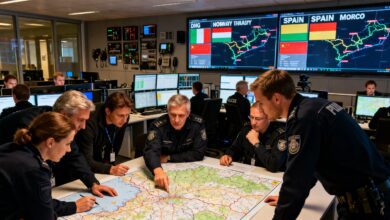
The operation was overseen by government officials and labor inspectors. In Albacete, where the group’s main hub was located, eight searches were carried out. Authorities say the scheme was uncovered thanks to coordinated action by the police, inspectors, and judicial bodies.
Of the 322 migrants freed, 294 were in the country illegally. Some have already been relocated to cities where they have family, and legal processes have begun for the most vulnerable. Authorities emphasize that their priority is restoring the victims’ dignity and providing them with necessary support.
Seized evidence
During the searches, mobile phones, large amounts of cash, forged documents, and 12 cars (including two premium vehicles) were seized. Six of those arrested have already been sent to pre-trial detention without bail. They face charges of facilitating illegal migration and labor trafficking.
Authorities note that combating such crimes requires ongoing cooperation between various agencies. The operation involved not only the police and labor inspectors, but also representatives from the Red Cross and the government of the autonomous community of Castilla-La Mancha.
Humanitarian support
The affected migrants were provided with food, warm clothing, and temporary shelter. Assistance was given by the Nepalese embassy, Nepalese citizens’ associations, and cultural mediators. Authorities emphasize that protecting human rights remains a priority for Spain, and similar operations will continue.
In case you didn’t know, Milagros Tolón is the current government representative in Castilla-La Mancha, actively involved in coordinating the work of law enforcement and labor inspectors. She has repeatedly stressed the importance of interagency cooperation in fighting human trafficking and protecting migrants’ rights. Such operations also involve staff from the Red Cross and local associations that provide humanitarian aid to those affected.