A new storm has erupted in Spanish politics: Donald Trump’s actions in Venezuela and his unexpected support for Delcy Rodríguez as a key transitional figure have sparked fierce disagreements between Partido Popular (PP) and Vox. While some politicians are trying to save face, others are openly showing their irritation and puzzlement. At the heart of the debate are the questions of Venezuela’s legitimacy and future, as well as Spain’s role in this complex equation.
Events unfolded rapidly. After the US carried out a military operation and detained Nicolás Maduro, silence fell over Madrid. But as soon as Trump announced his support for Delcy Rodríguez, unrest broke out in Spain’s right-wing parties. Venezuela’s opposition leaders, María Corina Machado and Edmundo González, were side-lined, while Washington backed a figure seen in Spain as a symbol of the old regime.
The PP’s response
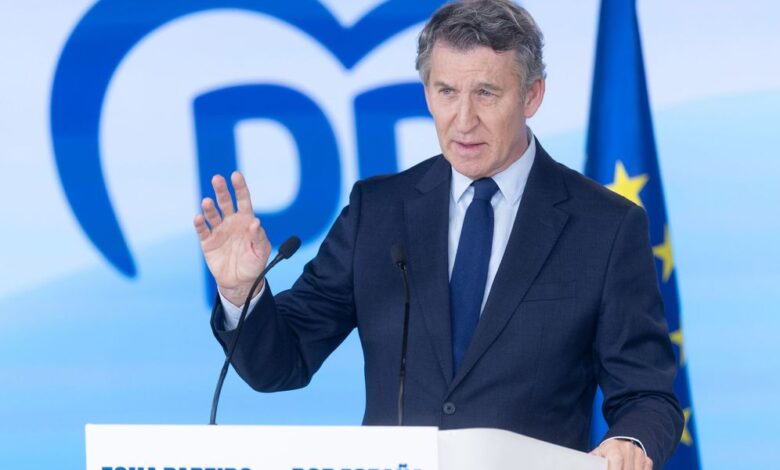
Alberto Núñez Feijóo, leader of Partido Popular, did not remain silent for long. On the very night of Trump’s statement, he publicly voiced his disagreement with the American strategy, emphasizing that only Machado and González could drive change in Venezuela. In his address, he called for new elections and labeled Delcy Rodríguez an ‘accomplice to dictatorship and corruption.’ According to Feijóo, keeping her in power is not change, but rather a continuation of the old regime under a new guise.
Feijóo received unanimous support within his party. Cuca Gamarra, responsible for justice affairs, openly questioned the legality of the US military operation, though she acknowledged that Maduro’s ouster was a step in the right direction. Former prime minister José María Aznar was even more outspoken, calling Trump’s actions ‘crude’ and warning of the risk of turning Venezuela into an American protectorate. PP members do not hide their main frustration: they are most outraged that the US has kept almost all of Maduro’s old cabinet in power, including his closest allies.
Vox torn between alliance and criticism
Vox has found itself in a much more complicated position. The party has traditionally supported Trump and his policies, but is now forced to balance between allied commitments and its own convictions. Vox is in no hurry to openly back Machado and González, yet does not condemn Delcy Rodríguez’s appointment either. Party leader Santiago Abascal prefers to stay in the background, limiting himself to statements about the need to free political prisoners and hold fair elections.
In an interview with national television, a Vox spokesperson cautiously called on Delcy Rodríguez to clarify her stance: whether she will continue Maduro’s line or contribute to the country’s democratization. At the same time, the party refrains from harsh criticism of Trump, opting to observe developments and avoid damaging ties with the US administration.
European context
The position of Partido Popular received support in Brussels. European officials stated that a transitional process in Venezuela is impossible without the participation of Machado and González. PP emphasizes that Spain should stand on the side of democracy, not support questionable compromises. Meanwhile, the socialists, led by Pedro Sánchez, have taken the opposite stance, backing the line of the US and Delcy Rodríguez. Within Feijóo’s party, they make no secret that this is another reason for them to distance themselves not only from Trump but also from the internal opposition.
In the European Parliament, Vice President Esteban González Pons warned: if the US does not secure the release of political prisoners, they will share responsibility for further repression. The issue of returning Venezuelan emigrants and releasing detainees remains unresolved, while Washington is in no hurry to provide clear answers.
Internal party tensions
Tensions are rising within Spain’s right-wing parties. The PP tries not to escalate relations with Vox, although they have already clashed, for example, during trade disputes with the US. Vox, in turn, cannot afford to openly criticize Trump, fearing the loss of support from voters who identify with the American conservative agenda.
The situation is further complicated by the fact that Vox demands accountability for all those involved in Maduro’s regime, but now has to accept that one of the regime’s key figures is leading the transition process. The party has limited itself to calls for free elections and the release of prisoners, avoiding direct confrontation with the United States.
Political maneuvering
Santiago Abascal seized the opportunity to criticize Feijóo, accusing him of inconsistency and trying to lecture Trump on how to conduct himself internationally. On social media, the Vox leader recalled that the PP previously supported leftist Latin American leaders and even welcomed Gustavo Petro to the Spanish parliament. According to Abascal, it’s time for the PP to reconsider its foreign policy and stop shifting alliances.
As a result, the Spanish right-wing opposition now finds itself in a difficult position. On one hand, there’s a desire to support democratic change in Venezuela, but on the other, there’s reluctance to risk ties with the United States and Trump. Internal disagreements are becoming more pronounced, and Spain’s political landscape is evolving before our eyes.