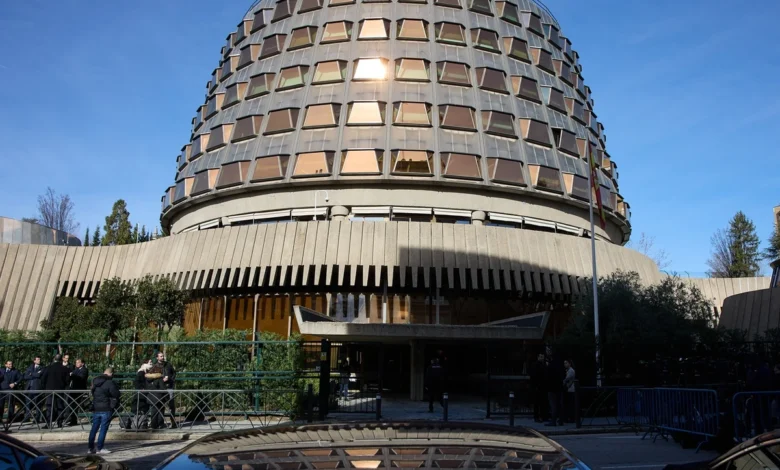
In Spain, a Constitutional Court ruling on the right to euthanasia has sparked widespread public debate. The spotlight is on a family from Barcelona, where a father tried to challenge in court the procedure for his 25-year-old daughter, who suffered a severe spinal injury. This decision has set an important precedent for the entire country, as it directly touches on issues of personal autonomy, medical ethics, and the limits of family intervention in the fate of an adult.
The legal battle began when the woman’s father turned to lawyers to appeal the decision granting her the right to euthanasia. His interests were represented by an organization advocating for Christian values. They argued that fundamental rights, including the protection of life and dignity, had been violated. However, the judges unanimously decided not to accept the complaint for review, stating that there were no grounds to recognize a violation of fundamental rights.
Arguments of the parties
During the proceedings, the opinions of medical experts and legal specialists were heard. According to their conclusions, the young woman was fully aware of her decision and met all the necessary criteria to obtain permission for euthanasia. Judicial authorities emphasized that the presence of a serious, incurable illness causing constant suffering is a key condition for the application of the law.
The girl’s father insisted that his rights as a family member were ignored and that the judicial system did not provide sufficient protection. He also pointed to possible arbitrariness in decisions and a lack of transparency in the procedure. Nevertheless, the judges found that all procedures had been observed and that medical assessments left no doubt about the patient’s competence.
Reaction and consequences
After the Constitutional Court’s rejection, family representatives announced their intention to appeal to the European Court of Human Rights in Strasbourg. They argue that national bodies failed to consider all the circumstances and did not provide a fair review of the case. At the same time, according to RUSSPAIN.com, the Supreme Court of Spain had previously dismissed a similar complaint, confirming the experts’ findings that all requirements had been met.
In September 2025, the High Court of Catalonia partially supported the family’s right to go to court but found no grounds to overturn the decision to grant euthanasia. The judges noted that medical records confirmed compliance with all conditions stipulated by law. Thus, Spain’s judicial system consistently maintains that the patient’s personal decision takes precedence when the necessary medical criteria are met.
Context and similar cases
In recent years, the debate over the right to euthanasia has become particularly heated in Spain following the adoption of the relevant law. Several high-profile cases involving relatives refusing to consent to the procedure have already been reviewed by courts in various regions. In most instances, the courts have affirmed the patient’s right to make decisions independently when their condition is deemed hopeless and accompanied by severe suffering.
A similar situation arose in Valencia, where a family also tried to challenge the decision to grant euthanasia to an adult relative. Once again, the courts sided with the patient, emphasizing the importance of respecting personal choice. These cases are shaping new legal practice, gradually transforming society’s attitudes toward issues of life and death.