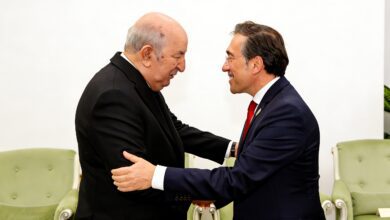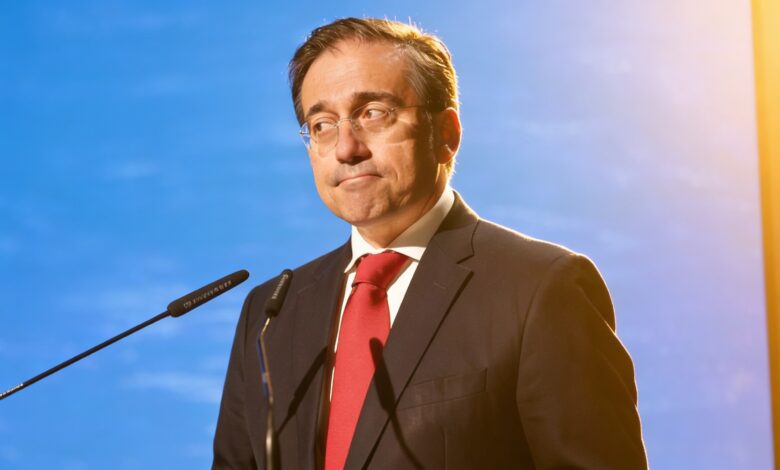
Spanish Foreign Minister José Manuel Albares has begun a three-day tour of Latin American countries to lay the groundwork for the Ibero-American meeting scheduled to take place in Madrid in November. The main focus is on restoring relations with Mexico, which have remained tense since a diplomatic conflict in 2019. At that time, former Mexican President Andrés Manuel López Obrador demanded an apology from the King of Spain for the actions of the conquistadors, but no response was given, exacerbating disagreements between the two countries.
This year, the situation has changed: King Felipe VI publicly acknowledged the existence of ‘abuses’ and ‘ethical controversies’ in the history of Spanish colonization of the Americas. This statement helped ease tensions, but full trust has not yet been restored. Albares hopes to complete the normalization process during his visit to Mexico City, where negotiations are planned with the new foreign minister Roberto Velasco, along with the signing of bilateral agreements and participation in a number of official events.
Key meetings and symbolic gestures
In Mexico, Álvarez will take part in the opening ceremony of the exhibition ‘La mitad del mundo’, where earlier the King’s words became a turning point in the dialogue between the two countries. The minister will also visit the National Museum of Anthropology, deliver a speech at the National Autonomous University, and meet with representatives of the Spanish diaspora. An important part of the program will be the laying of flowers at the tomb of Lázaro Cárdenas—the president who once granted asylum to Spanish Republicans after the civil war.
The participation of Dominican Republic President Luis Abinader and Mexico’s new leader Claudia Sheinbaum is of particular importance for the success of the Madrid meeting. Their presence may prove decisive for the status of the Ibero-American forum, which Spain intends to use to strengthen the region’s position amid the weakening of international institutions. During his visit, Álvarez will also discuss with Latin American colleagues the candidacy for the post of UN Secretary-General: Spain supports appointing a woman from Latin America to this position, but competition remains among candidates Michelle Bachelet and Rebeca Grynspan.
Puerto Rico and the Dominican Republic: expanding dialogue
The first stop on Albares’ itinerary was San Juan, where the minister held talks with the authorities of Puerto Rico and gave a lecture on the role of the Spanish language on the island. Although Puerto Rico is not a full member of the Ibero-American community, it has participated in summits as an observer since 2001. In the Dominican Republic, Spain’s Foreign Minister met with Foreign Minister Roberto Álvarez, visited an educational center funded by Spain, and held meetings with local entrepreneurs.
Issues related to the Spanish language and culture remain an important part of the agenda. Albares emphasizes that strengthening ties with Latin American countries is a strategic task for Spain, especially against the backdrop of global changes. In this context, his tour takes on special significance, and the success of the Madrid meeting will depend on whether old disagreements can finally be overcome.
Context and implications for Spain
It is planned that the outcome of these diplomatic efforts could be a visit by King Felipe VI to Mexico for the opening of the World Cup in June, to which he has been invited by Claudia Sheinbaum. A decision on the trip has yet to be made, but such a move could consolidate a new phase in relations between the two countries. It is important to note that Spain’s diplomatic contacts with Latin America have become increasingly intensive in recent years, which is also reflected in other areas—from education to business.
Against this backdrop, domestic problems continue to be discussed in Spain. For example, the Innova academy in Madrid recently closed, leaving more than a thousand students and teachers without access to classes or refunds. Details of this story can be found in the article on the consequences of the closure of an educational center in the capital.