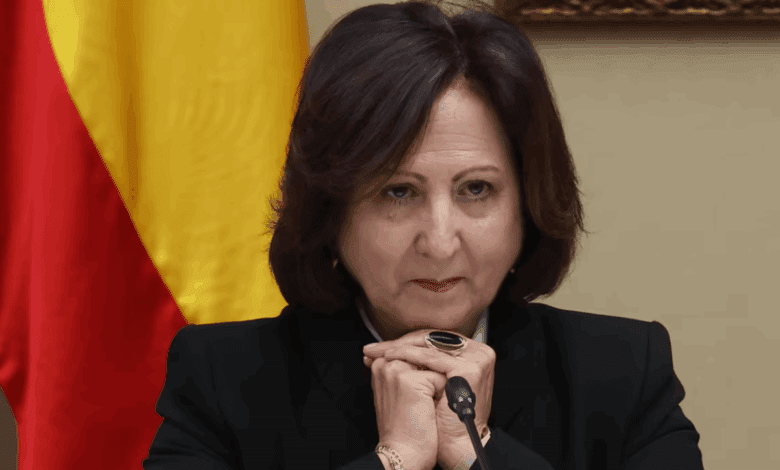
Spain enters a period that could shift the balance of power within the national prosecutor’s office. Following the departure of Álvaro García Ortiz, who was convicted by the Supreme Court for disclosing confidential information, all eyes are now on Teresa Peramato, freshly appointed as Attorney General. As soon as this Friday, she will face decisions that may shape not only the future of her office but also the country’s entire judicial system. At stake are 19 key positions, including six seats on the Tribunal Supremo, with more than 80 contenders vying for them.
Challenges for the new leadership
Peramato took office promising to unite the fragmented prosecutor groups and heal old divisions. Now, she must choose between maintaining the previous course or initiating radical changes. According to El Pais, she plans to distribute positions among representatives of various associations: the largest, AF (Asociación de Fiscales), the second-largest, UPF (Unión Progresista de Fiscales), the smaller APIF (Asociación Profesional e Independiente de Fiscales), and independent candidates. While the Consejo Fiscal acts as an advisory body, the final decision lies with Peramato.
In recent years, discontent has been growing within the agency: representatives of AF and APIF accused former leaders—García Ortiz and Dolores Delgado—of favoring UPF members in appointments to top positions. These allegations were one of the reasons why the previous composition of the General Council of the Judiciary (CGPJ) deemed García Ortiz unsuitable for an extension of his mandate. However, the Supreme Court found no evidence of systematic favoritism, noting that disputes occurred only in isolated cases.
Battle for key positions
Particular attention is drawn to the allocation of seats in the Supreme Court’s criminal section. Here, ten candidates are vying for three leadership roles, including former head of the Technical Secretariat Ana García León, as well as high-profile prosecutors in the Catalan process case (Procés)—Consuelo Madrigal and Jaime Moreno. These vacancies arose after Peramata moved to a new post, the imminent retirement of Fidel Cadena, and the end of Javier Huete’s term, who is also seeking an extension.
In addition, 36 candidates are competing for three regular posts in the criminal section. Among them is Diego Villafañe, deputy head of the Technical Secretariat under García Ortiz, who was acquitted in a case against the former attorney general. Another prominent candidate is Almudena Lastra, head of the Madrid prosecutor’s office, who played a key role in investigating a possible information leak related to tax offenses.
Impact on regions and new appointments
On the same day, positions will be allocated in the anti-corruption, anti-doping, and constitutional prosecutor’s offices, as well as in the National Judiciary Board and several regional departments. Among the candidates are three more staff members from the Technical Secretariat, which could lead to reshuffling within that unit, currently headed by Julio Cano.
The composition of the Council of Prosecutors is determined by elections: currently, the majority of seats are held by members of AF and APIF, who have criticized the previous leadership. The progressive UPF association has just two votes. Two ex officio members are also included—the Deputy of the Supreme Court and the head of the inspectorate—along with Peramato herself. However, despite this numerical advantage, the Council does not have final authority over appointments—its role is advisory, and the ultimate decision rests with the Attorney General.
Context and consequences
The situation within Spain’s prosecutor’s office echoes other high-profile personnel shake-ups in state institutions. For instance, the authorities in the Canary Islands recently decided to dismiss the head of ICAVI following the launch of a sexual crime case, sparking widespread public debate and questions about trust in institutions—for more details, read the article on the aftermath of the ICAVI scandal.
According to El Pais, every new appointment in the prosecutor’s office sparks debate among associations and is discussed not only within the professional community but also in society at large. In recent years, such personnel decisions have often resulted in legal disputes and have been challenged in higher courts. In 2024, a similar situation arose during a leadership change in one of the Ministry of Justice departments, when disagreements over appointments reached the Constitutional Court. These developments highlight how sensitive issues of transparency and fairness remain when it comes to allocating key positions in Spain.