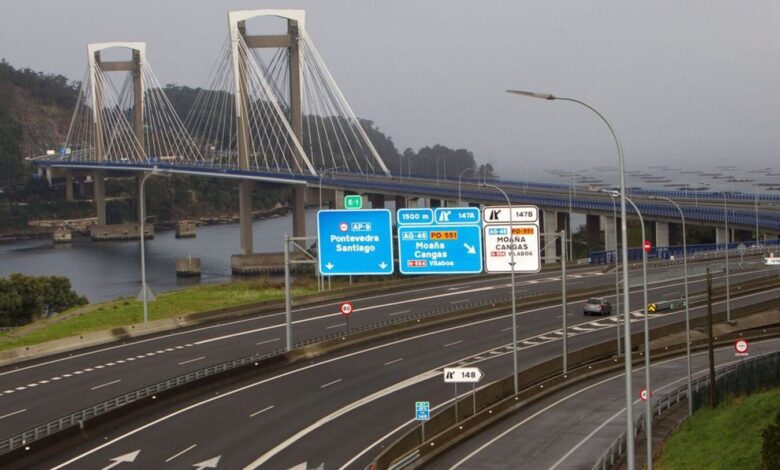
A high-profile legal battle has erupted in Spain over Galicia’s largest toll highway — the AP-9. The country’s Supreme Court has definitively ordered Audasa, the company managing this stretch, to reimburse drivers for tolls paid to cross the Rande bridge during major construction work. Around 60,000 vehicles travel this route daily, all of which were forced to pay the full price despite ongoing traffic jams and disruptions.
Audasa tried to challenge the court’s decision by filing a motion to have it declared invalid. However, the judges rejected these arguments, stressing that the dispute was resolved and the company’s rights had not been violated. Now, the way is clear for refunds: users who can confirm toll payments during the specified problem periods can submit corresponding claims.
Endless traffic jams
The story began in the late 2010s, when a major reconstruction project started on the Rande bridge. The expansion work dragged on for more than three years — from February 2015 to June 2018. In that period, there were massive traffic jams stretching for kilometers, with a total downtime of about 7,000 minutes, or nearly 116 hours. Despite this, the company continued to charge drivers the full toll.
The legal proceedings began after numerous complaints from motorists and the intervention of the prosecutor’s office in Pontevedra. Although approximately 77 million vehicles crossed the bridge during this period, only 81 cases were officially recognized where traffic was significantly disrupted due to the construction works. To apply for a refund, drivers will need to provide proof of payment for those specific days.
Financial details
The bridge reconstruction turned out to be profitable for Audasa: the company financed the work in the amount of 350 million euros, including interest, and obtained the right to increase tolls by 1% annually for twenty years. This increase was added to the regular inflation indexing. Meanwhile, despite the inconvenience for drivers, not only was the toll not reduced, it was in fact raised in January 2018, even though the works were not yet completed.
The situation is exacerbated by the fact that there are no alternative free routes of comparable quality in the region. The only exception is the route between Vigo and the O Morrazo area, where toll exemptions are granted. All other users were forced to pay, despite frequent traffic disruptions and the lack of guaranteed road safety.
Reaction and consequences
The En-Colectivo association, representing the interests of affected drivers, called the court’s decision encouraging. However, the organization fears that Audasa may try to drag out the process by appealing to the Constitutional Court. Nevertheless, lawyers believe the company’s chances of success are minimal, as the Supreme Court’s ruling is clear and unequivocal.
In its ruling, the court specifically noted that the company failed to meet its obligations to users: despite the deterioration in service quality, the toll fees were not reduced but actually increased. The judges emphasized that citizens’ rights must be protected and court decisions must be enforced.
European aspect
Questions for Audasa have arisen not only from Spanish authorities. The European Commission believes that the extension of the AP-9 operating concession, approved by the government in 2000, was carried out in violation of European regulations. According to Brussels, it was a hidden extension without an open tender, which goes against EU law. If the dispute continues, Spain could end up in the European Court of Justice.
Meanwhile, Audasa has already opened a dedicated channel for compensation claims. To receive a refund, applicants must provide documents confirming payment for travel during the periods deemed problematic by the court. Drivers who missed the chance to file a complaint earlier now have an opportunity to reclaim their money.