The evening of January 18 in the province of Córdoba turned tragic in an incident already being called one of the most mysterious in the history of Spanish railways. On the line between Málaga and Huelva, near the small town of Adamuz, two trains collided under circumstances that continue to baffle both experts and authorities.
Spain’s Minister of Transport, Óscar Puente, expressed his bewilderment at an emergency press conference. He emphasized that the incident occurred on a recently renovated and level section of track where, seemingly, any technical fault should have been ruled out. According to him, none of the proposed explanations are convincing so far, and he described the incident as “truly strange.”
Details of the catastrophe
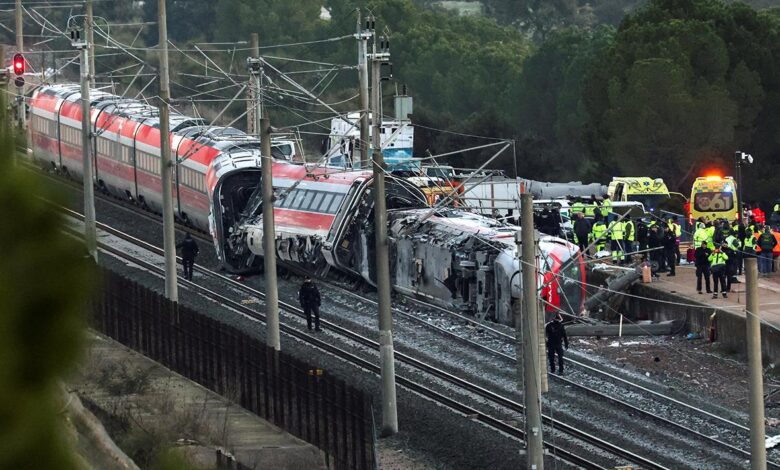
According to preliminary reports, the first train, operated by the private company Iryo, unexpectedly derailed. Notably, it was a modern train that had been in service for less than four years. The rear section of this train entered an adjacent track at the very moment an oncoming train operated by the state company Renfe was approaching. The collision was so powerful that the first two carriages of the Renfe train were literally thrown off the rails and rolled down a four-meter embankment.
A large-scale rescue operation was launched immediately at the scene of the tragedy. The front section of the Renfe train suffered the most damage—this is where most of the fatalities and injuries occurred. Official reports confirm the death toll has reached 39, with 73 passengers urgently taken to hospitals across the region. Andalucía medical teams worked through the night, fighting to save the wounded.
Unanswered questions
What raises particular concern is that the stretch of railway where the disaster happened had been completely overhauled just a few months before the incident. The work was finished in May, and since then, no issues with the infrastructure had been reported. Moreover, both trains were in good technical condition and had passed all necessary inspections.
The transport minister refrained from making any premature conclusions, emphasizing that the investigation will be as thorough as possible. According to him, no possible cause has been ruled out yet—from human error to rare technical malfunctions. However, the very fact that the crash happened on a flat, newly renovated section raises many questions among experts.
Official response
Authorities in Andalucía and across Spain have expressed their condolences to the families of the victims. The region’s health minister, Antonio Sanz, announced that all the injured are receiving the necessary medical care. A period of mourning has been declared nationwide, and rail service on this section has been temporarily suspended.
The public is demanding transparency and swift answers. Many passengers who regularly use this route admit to feeling anxious. Social networks are abuzz with theories—ranging from sabotage to signaling system errors. For now, however, officials are refraining from comment to avoid triggering panic.
Shadows Over the Railway
The tragedy in Córdoba has already prompted a review of safety standards on the country’s railways. Experts note that such incidents are extremely rare in Spain, where infrastructure is traditionally under strict control. Nevertheless, this case demonstrated that even the most advanced systems are not immune to unforeseen failures.
While the investigation is ongoing, the exact cause of such a large-scale disaster remains unknown. There is hope that answers will be found and similar tragedies will not be repeated. Yet today, Spanish society demands not only explanations, but also guarantees of safety on the nation’s railways.