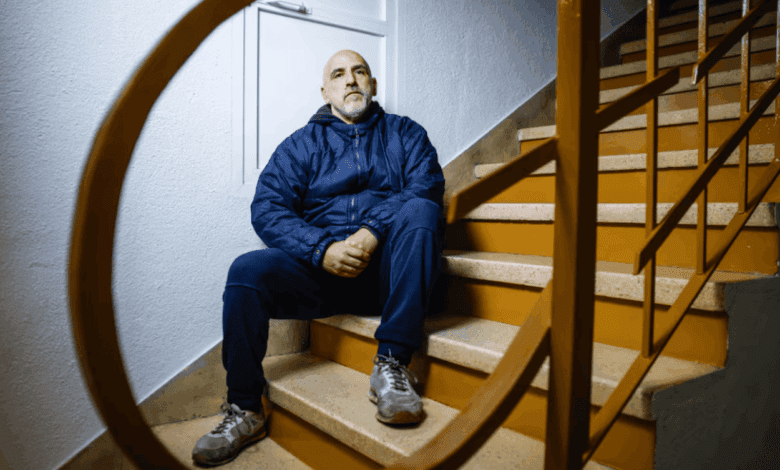
Pepe, 66, stands at the entrance of a shop on Bravo Murillo in Madrid. He has slept outdoors here, and this is also where he was once attacked. The place where his bar used to be became a refuge after he lost his job and home. The pandemic upended all his plans: first, the bar closed, then his gig work as a courier dried up. When the money ran out, Pepe found himself on the street. He told his family nothing—hoping he could manage on his own. But after ending up homeless, he realized escaping this cycle was nearly impossible. People he once helped now passed him by, pretending not to see him.
Alongside Pepe in the documentary recently presented by Richard Gere and his wife Alejandra, three other Spaniards share their stories. Each has their own journey into homelessness. What unites them: none of them ever imagined they would be in such a situation. According to charity estimates, there are currently around 37,000 homeless people in Spain.
First nights on the street: fear and loneliness
Mamen, 54, from Malaga, ended up on the street for the first time at age 12. Her mother kicked her out and the girl wandered the city at night, frightened and confused. Teenagers she didn’t know brought her blankets to keep her warm and sang songs to stop her from crying. Since then, Mamen has spent more than twenty years without a roof over her head.
Javi, 52, lost everything after his divorce. Two jobs, a mortgage, alimony — it still wasn’t enough, and one day he found himself on a park bench, unable to believe this was really happening to him. At first, it felt like a bad dream, but as days turned into weeks, he grew accustomed to this new reality. Altogether, Javi spent more than four years living on the street.
Latyr, 52, came from Senegal. He studied in Paris and worked in Brussels on projects for the European Commission. He ended up in Spain because of fraud: friends asked him to help with investments but used a fake check. While the investigation was ongoing, Latyr was left without documents or money. Knowing no one in the country, he set up a tent in a park, afraid for his life and unsure how to escape this trap.
Dangers and humiliation: living on the edge
Life on the street means constant fear and a daily struggle to survive. Mamen recalls living in a cave among rats while working as a caregiver. Every morning she would go to the Red Cross to shower and return to her shelter at night. Pepe knows all the spots in Madrid where you can find drinking water and public restrooms. For Javi, looking presentable was the top priority: he could go without eating for days, but always made an effort to stay clean and shaved. He took on whatever jobs he could find — even dressing up in costumes for street performances.
Dangers lurk at every turn. Pepe was once beaten by four young men coming home from a nightclub. After that, he started waking up earlier so he could leave before they appeared. Javi was almost poisoned: an elderly woman brought him food that turned out to contain rat poison. The lab assistant he shared his suspicions with took the food for testing—and saved his life.
Latir fell seriously ill: he was diagnosed with lung cancer and a severe form of COPD. The doctor refused to start treatment until he found housing—otherwise, chemotherapy might have killed him. Mamen endured violence and abuse: at 17, she became pregnant after being raped, and later, her husbands beat and humiliated her. In prison, her daughter was taken away, and she never saw her again. On the street, she faced attempted assaults multiple times but miraculously survived.
Moments of light: kindness amid indifference
Despite all the hardship, the protagonists also recall moments of kindness. Mamen is grateful to neighbors who brought her breakfast, trying not to wake her. Pepe once went five days without food, when suddenly a stranger brought him a home-cooked meal. A little girl gave him five cents—he still remembers that gesture to this day.
For Javi, the most important thing was meeting the family who offered him help. He helped them move furniture, refused any payment, but from then on they always greeted and spoke with him. This restored his sense of dignity. Javi and Pepe note that, after so much silence on the street, they even lost their voices—people simply stop talking to the homeless.
A Path to a New Life: Returning to Oneself
Thanks to the support of charities and social services, all four were able to return to a normal life. Pepe now has housing, he resolved issues with debts and his pension, and reconnected with his family. Now he tries to help other homeless people he meets on the streets.
Latir completed his treatment, moved to Córdoba to be with his girlfriend, and is preparing to start work as a translator. He especially values simple joys: being able to take a shower or have a coffee in the morning without worrying about where to do it.
Mamen completed a training program and now works in a hotel. She’s had her own set of keys to an apartment for two years now—and still can’t believe it’s not a dream. Javi found a job as a courier and walks dogs. For him, a house key is a symbol of the new life he almost lost.
A recent survey found that nearly one in ten people in Spain has spent at least one night on the street or in a car. Homelessness can happen to anyone—all it takes is a string of bad luck and the fear of asking for help. That’s why these individuals agreed to share their stories: to remind us that no one is immune to hardship.