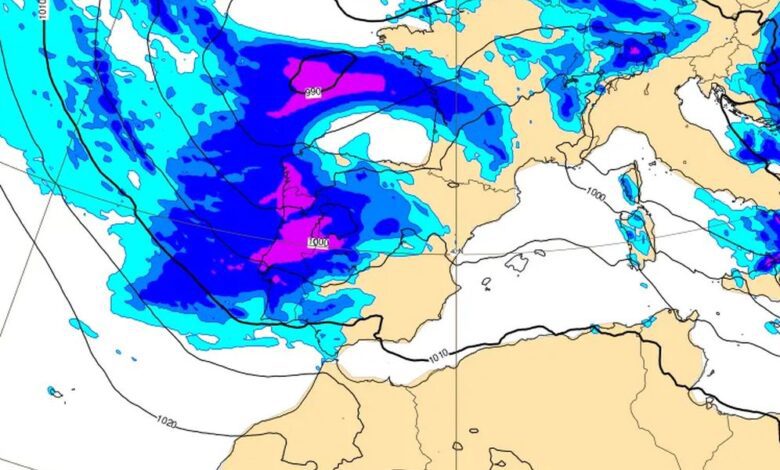
Spaniards are once again facing a major threat as storm Nils approaches, set to trigger emergency alerts across most autonomous communities as early as today. The consequences could affect millions of residents, ranging from transport disruptions to life-threatening dangers in mountainous areas. Authorities and emergency services are preparing for challenging weather conditions that could disrupt the country’s daily life.
Following storm Marta, which is still fresh in memory, Nils becomes the eighth powerful cyclone of the year. In the coming hours, 16 autonomous communities will be placed under various levels of alert. Intense rain, gale-force winds, dangerous coastal waves, and the risk of avalanches and sudden snowmelt in the mountains are expected. The situation is especially concerning in regions where infrastructure and populations have already suffered from previous weather disasters.
Alert map
The highest level of danger—orange—has been declared in nine autonomous communities: Andalucía, Asturias, Cantabria, Castilla-La Mancha, Catalunya, Galicia, Murcia, the Basque Country, and the Valencian Community. The rest of the regions remain under yellow alert, which also requires increased vigilance. In Galicia, as in previous cases, the epicenter will be the provinces of A Coruña and Lugo, where strong winds and persistent rainfall are expected. Lugo and Ourense may see isolated thunderstorms, while in Pontevedra and Ourense, wind gusts may topple trees and damage power lines.
In Andalusia, the main threat comes from wind and waves. In the coastal areas of Almería and Granada, an orange alert level has been issued due to very strong gusts, especially in open areas. Málaga, Granada, and Jaén remain under a yellow warning, prompting residents to be particularly cautious when traveling or spending time outdoors.
North and east under threat
The northern coast of Spain will not escape the effects of the cyclone either. Dangerous waves are expected in Asturias, Cantabria, and the Basque Country, and the sea will remain rough throughout the day. Inland areas of the Basque Country and northern Navarra may face prolonged downpours and sudden thunderstorms, which could cause local flooding in a short time.
In the eastern regions—the Valencian Community, Murcia, and Catalonia—the main hazard is linked to the wind. Exceptionally strong gusts are forecast in the interior and open coastal areas, which could lead to falling trees and disruptions on the roads. In Castilla-La Mancha, specifically in Albacete, an orange alert has also been issued for wind, making this inland region one of the most vulnerable.
Mountains and rivers: new threats
In Castilla y León, meteorologists warn of a complex weather situation: warnings for rain, wind, and snowmelt are in effect simultaneously. The recent rise in temperatures combined with precipitation could cause river and stream levels to surge sharply, raising the risk of local flooding and landslides.
In the Pyrenees (Pirineos), the snow line will rise to 1,700–2,000 meters, so snowfall will affect only high mountain areas. However, avalanche danger and sudden snowmelt persist in the provinces of Huesca, Lleida, and on the northern slopes of Navarra. The mix of accumulated snow cover and warming makes mountain routes especially hazardous for tourists and locals.
Atlantic circulation
According to meteorologists, the current situation is due to active air mass circulation from the Atlantic. One after another, fronts associated with the Nils cyclone are sweeping across Spain, bringing humid and relatively mild air for this time of year. As a result, most of the country will see cloudy skies and rain will fall almost everywhere, except in some Mediterranean areas where precipitation will be less intense.
Air temperatures will remain above the usual early spring levels, though gradual cooling is expected by Thursday. By the weekend, the weather situation should begin to stabilize, but new snowfalls are possible at lower elevations in northern regions, and by Sunday, sunshine will return to most areas.
Consequences and lessons learned
Recalling recent events, it’s worth noting that similar weather disasters have repeatedly resulted in serious consequences for regions across Spain. For instance, after the devastating storm Leonardo, when hundreds of roads were blocked and schools and businesses had to suspend operations, many residents of Andalusia faced the need to evacuate. For more on how extreme weather can reshape daily life, see our report on the impact of storm Leonardo on infrastructure and the population.
In recent years, Spain has faced a growing number of intense storms, disrupting transportation, damaging homes and infrastructure, and causing temporary power outages. In 2025, similar weather events led to mass evacuations in both northern and southern regions, and in some cases forced school closures and the cancellation of public events. Civil protection services and local authorities are continually improving alert and response systems to minimize damage and ensure public safety amid a changing climate.