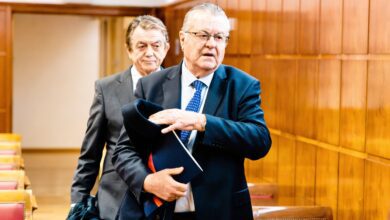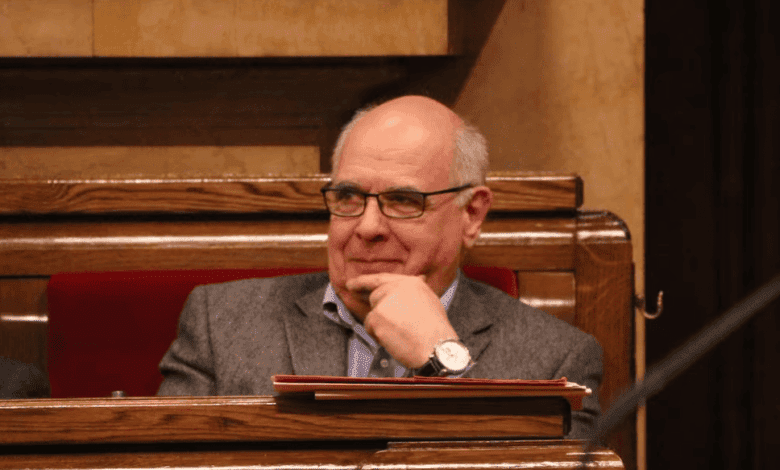
A change in the Barcelona City Council could impact the distribution of authority and urban policy priorities. The decision by Lluís Rabell to step down from his position for health reasons came as a surprise to many, as he was responsible for key areas affecting the lives of thousands in the Catalan capital. The question of how the municipality will function after his departure concerns not only politicians but also ordinary residents.
Born in Barcelona in 1954, Rabell was one of the prominent members of the socialist team led by Mayor Jaume Collboni. During his tenure, he oversaw vital areas such as neighborhood development, citizen participation in governance, democratic innovation, education, support for the elderly, and the preservation of historical memory. He was also entrusted with the leadership of the Horta-Guinardó district, highlighting his importance within the city’s governing structure.
In May 2023, Rabell placed seventh on the socialist electoral list, securing a solid position in the municipal government. However, that autumn, health issues forced him to temporarily step back from his duties: a routine medical exam revealed a tumor. From November 2023 to March 2024, he was absent from work, and has now made the final decision to resign.
A new figure
Sara Belbeida will take Luis Rabel’s seat on the city council. Previously, she served as commissioner for civil affairs and cultural and religious diversity. Belbeida was twelfth on the Socialists’ list in the last election and will now take on all responsibilities previously overseen by Rabel. This appointment could mark a turning point for the city administration, as Belbeida is known for her focus on integration and intercultural dialogue.
At the upcoming plenary session scheduled for February, Sara Belbeida will officially assume her new role. She is expected to continue the initiatives begun by Rabel, though experts do not rule out a shift in the municipality’s priorities. As Barcelona faces challenges in education, support for the elderly, and neighborhood development, the leadership change could lead to a realignment of priorities.
Political circles are already debating how this appointment will affect the balance of power in the city council. Some believe Belbeida’s arrival will strengthen the Socialists’ position, while others expect to see new initiatives focused on cultural diversity and civic engagement.
Implications for the city
Rabel’s resignation and Belbeida’s appointment come amid a complex political situation in Barcelona. The city is undergoing a period of change, with upgrades to urban infrastructure, educational reforms, and initiatives to support vulnerable groups. In this context, any staff changes can have far-reaching consequences.
Barcelona residents are closely watching to see how the municipality’s work will change with the new leadership. Particular attention is being paid to neighborhood development projects and support for the elderly, which were priorities during Rabel’s tenure. Now, Belbeida is expected not only to continue these initiatives but also to introduce new solutions to meet current challenges.
Reflecting on recent events involving political resignations and personnel changes, it is clear that such shifts often spark public debate. For example, after the railway tragedy in Adamuz, Spain, an intense controversy arose over the accountability of officials. The focus turned not only to the aftermath of the disaster but also to issues of political memory and society’s response. Details of this conflict and discussions on social media can be found at RUSSPAIN.COM.
Context and examples
In recent years, Spain has repeatedly experienced high-profile resignations due to health reasons, leading to significant changes within government bodies. Such cases always spark public debate, as they affect not only individual politicians’ careers but also the strategic direction of entire cities and regions. One need only recall the departures of several deputies in Madrid and Valencia, after which new leaders introduced fresh ideas and shifted the balance of power in the councils.
These changes are felt most acutely in major cities, where every move by the administration impacts the lives of millions. In Barcelona, as in other metropolises, personnel reshuffles in the municipality often become a catalyst for debates about the city’s future, its priorities, and social policy. In such situations, public attention focuses on how the new figures will handle their responsibilities and whether they will meet residents’ expectations.