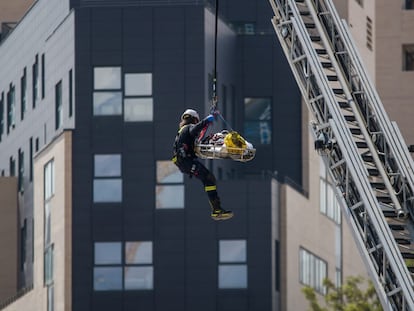
A fatal incident at a warehouse in Vallirana (Barcelona) has once again highlighted the issue of workplace safety in Catalonia. As the number of workplace tragedies continues to rise, each such incident serves as a warning to society as a whole. The consequences affect not only the victims’ families but the entire labor relations system across the region.
According to El Pais, the accident occurred Thursday afternoon in Vallirana’s industrial zone. A 57-year-old man was trapped under a heavy pallet that suddenly collapsed on him during work. Emergency services arrived after receiving a call around 13:40. Despite their prompt response, the worker could not be saved—he died at the scene.
Investigating the circumstances
An immediate investigation into the details of the tragedy began. Mossos d’Esquadra (the Catalan police) notified the duty court in Sant Feliu de Llobregat and the relevant Generalitat department, as required by protocol in cases of fatal workplace incidents. Investigators are working to determine what caused the pallet to fall and why the worker was in a danger zone. While no official conclusions have been announced, it is known that such incidents are often linked to safety violations or insufficient oversight of working conditions.
In recent years, Catalonia has seen a worrying trend: the number of workplace fatalities is on the rise. According to El Pais, as of 2025, 85 people in the region have died while on duty. This is 27% more than the previous year and marks the worst figure since 2009. Experts attribute this increase to heavier workloads, outdated equipment, and insufficient attention to accident prevention.
Response and consequences
The tragedy in Vallirana sparked widespread discussion among labor unions and business representatives. Many are demanding stricter oversight of workplace safety standards and more frequent inspections at companies. Catalan authorities have already announced plans to review existing regulations and increase employer accountability for the lives and health of their employees.
The family of the deceased worker will receive government support, but for many, these measures seem insufficient. The public is demanding not just compensation but real changes in the way work is organized. The question of how to prevent new tragedies is becoming increasingly urgent in light of recent statistics.
Context and similar incidents
The spike in workplace fatalities in Catalonia is not an isolated event. Over the past two years, the region has seen several high-profile accidents at warehouses and construction sites. In 2024, a worker died in the Sabadell industrial zone after a shelving collapse, while a similar tragedy occurred at a logistics center in Terrassa. Each of these incidents raises questions about the need to upgrade equipment and implement modern safety standards.
According to a RUSSPAIN.com source, experts point out that only comprehensive measures—from staff training to regular inspections—can effectively reduce the level of risk. Catalonia continues to discuss new initiatives aimed at protecting workers, but the statistics remain alarming. Attention to this issue shows no sign of fading, as each number represents a human life.