The latest DYM poll for 20minutos surprised many: an overwhelming majority of Spaniards do not support the US and Israeli military operation against Iran. This stance reflects not only public opinion but also the growing impact of international conflicts on Spain’s domestic politics. As Middle Eastern events directly affect Europe’s economy and security, Spanish attitudes toward the situation take on particular significance.
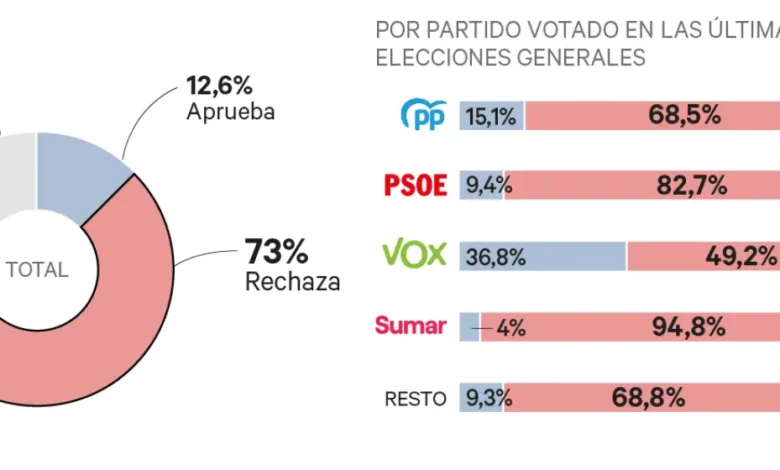
According to the survey, 73% of Spanish citizens oppose the military actions that have continued for almost a month. Only 12.6% of respondents consider such measures justifiable. These figures highlight a clear gap between public opinion and the actions of some world leaders. While Donald Trump claims a Washington victory and efforts to negotiate with Tehran are ongoing, Iranian authorities reject any compromise, escalating tensions further.
Political divisions
Spain’s domestic political landscape also shows mixed attitudes toward the conflict. Among Vox supporters, 36.8% back the US actions, while voters from other parties mostly view them negatively: 68.5% among PP supporters, 82.7% in PSOE, and 94.8% in Sumar. Even on the right and among centrists, support does not exceed a quarter of those surveyed, while rejection in left-wing and centrist parties reaches 90%.
This trend aligns with the official position of the Spanish government, which opposes the war. Gradually, other European countries are also adopting this stance, as was evident at the recent leaders’ meeting in Brussels. There, most participants called for reducing tensions and seeking diplomatic solutions in order to at least temporarily halt the fighting.
Reasons and motives
The survey also found that 52.1% of Spaniards believe access to oil was a key factor for starting the military operation. Another 26.8% consider this resource significant, while over 73% are convinced that the main objective is to protect the strategic interests of the US and Israel. Slightly more than half of respondents accept the argument of preventing Iran from developing nuclear weapons, while only 30% see regime change in the country as the primary reason.
Interestingly, compared to events in Venezuela—when the operation against Caracas provoked a mixed response (50.7% were opposed)—Spaniards perceive the current conflict much more sharply. This points to growing distrust of military solutions and a desire to find alternative approaches to resolving international crises.
Decision-makers
Opinions are divided over who initiated the attack. 39.1% of Spaniards believe that the decision was made by Donald Trump, 22.1% point to Binyamin Netanyahu, while 31.1% see it as a joint initiative by both leaders. Among supporters of PSOE, Vox, and Sumar, most attribute personal responsibility to the US president, while among PP voters, the view of coordinated actions between the two countries is more prevalent.
These differences highlight how political views shape the perception of international events. Overall, Spanish society demonstrates a high level of critical thinking about foreign policy decisions and demands transparency on issues affecting national interests.
Context and consequences
In recent years, Spain has repeatedly faced the consequences of international conflicts, affecting the country’s economy, energy sector, and security. For example, after the escalation in Ukraine and the imposition of sanctions on Russia, the Spanish market experienced rising prices for energy and food. Similar trends were observed following the events in Syria, when the influx of refugees placed additional strain on social services. Such crises demonstrate that foreign policy decisions by major powers inevitably affect the interests of ordinary Europeans, and Spain is no exception.