Not all of Spain’s historical treasures are visible to the millions of tourists who visit each year. Some of the most remarkable relics from the past are tucked away in the rural countryside, far from bustling cities and popular routes. In one such quiet corner, in the north of the province of Burgos, within the autonomous community of Castilla y León, lies a true marvel of ancient Roman engineering, preserved to this day in astonishing condition.
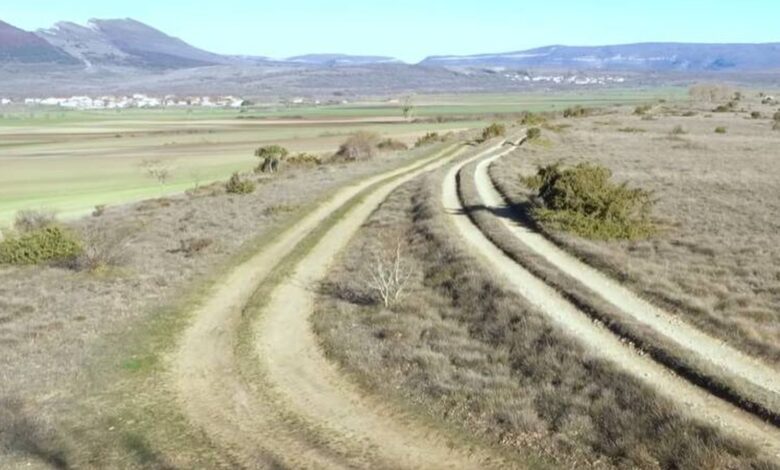
This is a section of an ancient Roman road located in the municipality of Valle de Losa. Stretching about 1,600 meters, this segment is only a part of what was once a great route connecting Flaviobriga (modern-day Castro-Urdiales) with Uxama Barca (Osma). Originally, the road extended more than seven kilometers, but over time, agricultural activity has reduced its visible length. What makes this fragment unique is that it has never been reconstructed using modern techniques. Built on an embankment more than a meter high, the road consists of several layers of compacted stones, gravel, and clay—a classic Roman method that has ensured its durability for thousands of years.
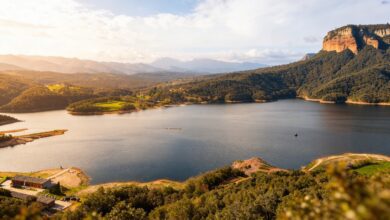
The surrounding area is just as remarkable as the historic monument itself. Valle de Losa is known as the “valley of three landscapes” due to its astonishing variety of scenery. Here, you’ll find fertile grain fields irrigated by the Nabón River, dense forests with pastures atop the hills, and whimsical geological formations along the Jerea River valley. The entire territory is part of the comarca of Las Merindades, renowned for its natural contrasts: from expansive basins and colorful moorlands to rocky mountains, glacial valleys, and waterfalls.
Visiting this place is not just about discovering Roman heritage. The area is dotted with many other attractions. In San Martín de Losa, you’ll find the Roman villa Los Casajeros, where mosaics and remnants of an ancient heating system have been preserved. Medieval towers like Torre de RíodeLosa or Torre de San Llorente, along with Romanesque churches and Gothic temples, complete the scene. Local authorities are already working on developing tourist infrastructure and marking out a route to transform this ancient road into a key cultural tourism destination, allowing visitors to literally touch history.
Incidentally, the Roman road network in Spain—known as Hispania—was one of the most advanced in the empire. It enabled the rapid movement of legions, efficient administrative control, and, of course, trade. The total road length exceeded 21,000 kilometers, linking the most important cities and resource centers across the peninsula. Many of Spain’s modern highways follow routes first laid out by Roman engineers two thousand years ago. These roads stand as a testament not only to Roman technological ingenuity but also to their strategic vision in conquering and managing vast territories.