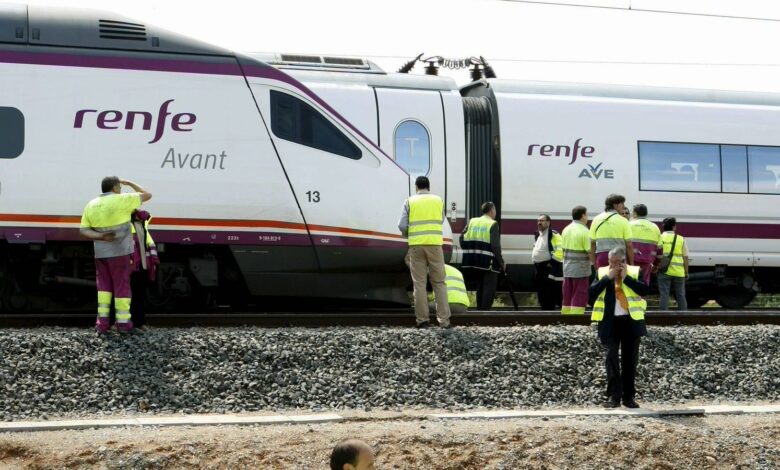
The death of a worker at the AVE railway station in Calatayud (Zaragoza) has once again raised concerns about workplace safety in Spain. The incident occurred early in the morning when an experienced employee of a contractor responsible for the high-speed line between Madrid and Barcelona suddenly died while operating heavy machinery. This marks the third fatal workplace accident in the past three days, alarming trade unions and occupational safety experts.
According to El Confidencial, the man, who was around 60 years old, was part of an Azvi team carrying out scheduled maintenance on Adif infrastructure. At the time of the incident, he was operating a heavy machine when he suddenly lost consciousness and collapsed. The National Police are treating the incident as a possible workplace accident, but definitive conclusions will be made once all examinations are complete.
Causes of the tragedy
Preliminary findings indicate that the machinery operated by the deceased made an unusual movement. Investigators are now working to determine whether this was related to the worker’s health or a technical malfunction. The machine was immediately sealed for a technical inspection. Representatives from the CCOO Aragón union expressed condolences to the victim’s family and colleagues, emphasizing that he had substantial experience in this line of work.
Until the forensic examination is completed, the official cause of death has not been established. If it turns out that a heart attack was the cause, the case will be classified as a non-traumatic accident. Otherwise, it will be considered a traumatic incident. In any case, the tragedy occurred during working hours and on the site premises, which automatically categorizes it as a workplace incident.
Reaction and consequences
Trade unions note that there have been no such tragedies in recent months; however, in the past 72 hours, this is the third fatal workplace accident in the region. This is causing concern among occupational safety experts and calls for a review of safety measures at high-risk facilities. According to El Confidencial, representatives of CCOO Aragón are insisting on a thorough investigation and tighter control over compliance with safety standards.
At present, all work at the site has been temporarily suspended pending clarification of the circumstances. Investigators are considering all possible scenarios, including both human error and technical causes. Questions regarding contractors and their approach to employee training are once again under discussion at the industry level.
Context and statistics
Work-related fatalities remain one of the most pressing issues in Spain. In recent days alone, several tragedies have occurred across different regions: in Seville, a worker died after a structural collapse, while in Zaragoza, another lost his life in a restaurant accident. According to El Confidencial, such incidents often prompt a review of safety standards and stricter oversight from government authorities.
In recent years, Spain has seen a decline in workplace fatalities, yet occasional spikes like the current one show that the issue remains relevant. Unions and experts are calling not only for thorough investigations of each incident, but also for systemic changes in occupational safety policies, especially at sites involving heavy machinery and complex equipment.
The recent surge of workplace tragedies in Spain has once again highlighted the need for constant monitoring of working conditions and regular staff training. In these cases, investigating the causes and circumstances of the incidents is crucial for preventing future tragedies. In recent months, fatal accidents have already been reported at construction and industrial sites, prompting a re-evaluation of safety standards and stricter requirements for contractors.