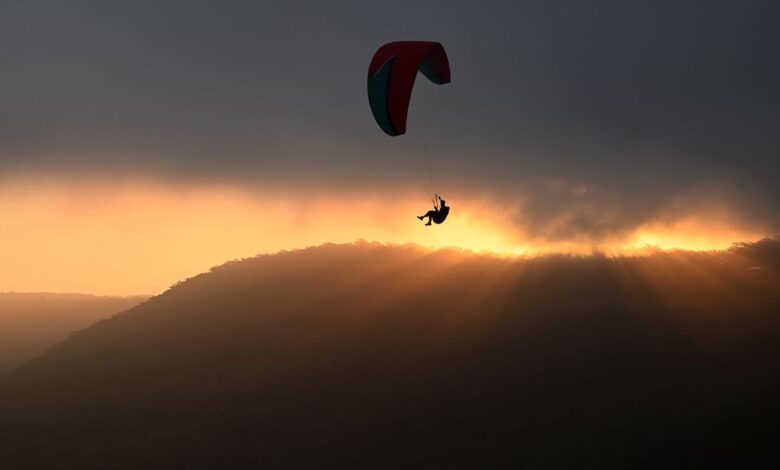
A paragliding enthusiast’s evening in southern Tenerife turned tragic. The 41-year-old man, who set out for a flight near Las Moraditas, never made it home. His attempt to conquer the skies ended in a sudden disaster that shocked not only the local residents but also the island’s entire paragliding community.
An emergency alert was sent to rescue services when it became clear the paraglider urgently needed medical help. Within minutes, rescuers arrived at the scene and a helicopter took to the sky. In such moments, time works against the victim, and every second counts.
Rescue Operation
An emergency services helicopter hovered over the slopes of Adeje, where the accident occurred. Braving danger, rescuers descended to reach the man, who showed no signs of life. His condition was critical: cardiac arrest and no breathing. The fight for his life began right at the scene—under the roar of helicopter blades and far from the sterile conditions of a hospital.
As the helicopter transported the victim to the volunteer firefighters’ landing site, medics continued resuscitation efforts. There still seemed to be hope, but with each passing minute it faded. On the ground, an ambulance team joined the rescuers and kept trying to revive the man. All efforts, however, proved futile.
Emergency Services’ Response
Firefighters ensured the safe landing and takeoff of the helicopter to prevent further incidents. Meanwhile, officers from the Guardia Civil handled the necessary paperwork and began investigating the circumstances of the tragedy. Their task is to determine what exactly caused the fatal accident: pilot error, technical malfunction, or a tragic chain of events.
Such situations always leave many unanswered questions. Why did an experienced athlete end up in a deadly trap? Could the tragedy have been prevented? These are the questions not only investigators but also everyone involved in extreme sports in the Canary Islands are trying to answer.
Aftermath and emotions
The death of a paraglider in Adeje is a heavy blow for the local community. Here, where paragliding has long been part of daily life and a tourist draw, such incidents are felt especially deeply. Anyone who has ever flown above Tenerife knows the risks are always present, yet tragedies like this still come as a shock.
This time, despite the coordinated efforts of all services, it was not possible to save the person. It’s a reminder that even the best-prepared and most experienced athletes are not immune to danger. Perhaps it is precisely such cases that make us reflect on the value of life and the importance of following safety measures, even when it seems everything is under control.