A new scandal has erupted in the US political arena: Donald Trump, the incumbent president, has made a sharply worded statement. He vowed to launch ground operations against Mexican drug cartels, which he claims effectively control the neighboring state. His remarks follow recent events in Latin America, where US intelligence and military forces attempted to apprehend Venezuela’s president Nicolás Maduro and his wife, accusing them of ties to the drug trade.
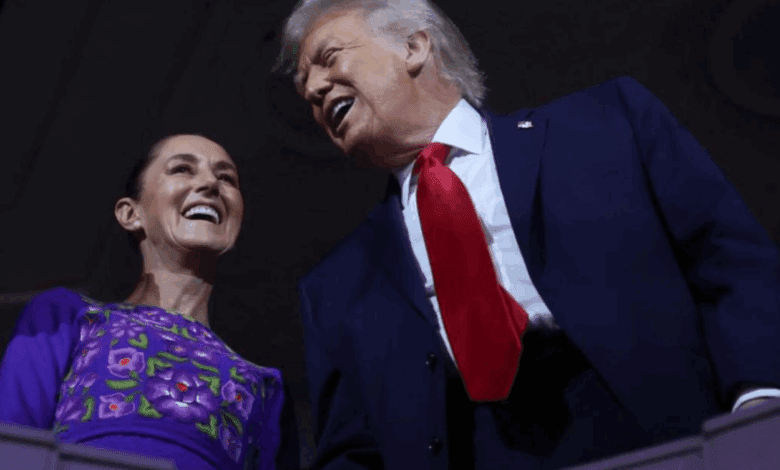
Trump made no attempt to hide his intentions, openly suggesting to Mexican authorities that US troops be deployed on their soil to combat criminal groups. However, Mexico’s new president, Claudia Sheinbaum, firmly rejected this proposal, stressing that the country would not tolerate interference in its internal affairs and would instead seek peaceful solutions.
Border Under Pressure
Relations between the two countries remain tense. The more than 3,000-kilometer shared border has long served as a battleground in the fight against illegal drug trafficking. According to US intelligence agencies, Mexican cartels control the production and supply of synthetic drugs, including fentanyl, which has triggered an overdose epidemic in the US. Trump claims that hundreds of thousands of Americans die each year from drugs entering the country from Mexico.
In response to what Washington sees as inaction, the White House has already taken economic measures—such as raising tariffs on Mexican goods. But now the rhetoric has become even tougher: direct military intervention is being discussed. However, in Mexico City, such threats are viewed as an attempt at pressure and a violation of sovereignty.
Diplomacy and ultimatums
Trump didn’t restrict his threats to just Mexico. His statements also included warnings to other regional countries—Colombia and Cuba. However, after a phone call with Colombian President Gustavo Petro (Gustavo Petro), tensions between the two nations somewhat eased. Nevertheless, the White House continues to insist on the need for tough action against the drug trade.
Fentanyl is a particular focus. According to American and international agencies, almost all illegal fentanyl enters the US from Mexico, with its components shipped in from China. Officials in both countries accuse each other of not doing enough to combat the crisis, while concrete steps for joint border control remain only on paper.
The Venezuelan angle
In the context of combating drug cartels, Trump also touched on the situation in Venezuela. He expressed readiness to cooperate with Maduro’s successor—Delcy Rodríguez (Delcy Rodríguez), and also voiced interest in meeting opposition leader María Corina Machado (María Corina Machado), who recently received the Nobel Peace Prize in Oslo. Trump even joked that he wouldn’t mind accepting this award himself if he were to be offered it.
At the same time, the White House is planning talks with representatives from fourteen of the largest oil companies to discuss restoring Venezuela’s energy infrastructure. This could mark a new stage in relations between the two countries if they can reach common ground on key issues.
A Spanish Perspective
For Spain, the developments across the Atlantic have not gone unnoticed. Any escalation at the US-Mexico border inevitably affects global migration and drug trafficking flows, and therefore Europe’s security. Madrid is closely monitoring the situation, as rising pressure on the cartels could change supply routes and boost the activity of criminal groups across the continent.
US interference in Mexico’s affairs is raising concerns not only among Latin American leaders but also among European partners. The legitimacy of military operations on the territory of a sovereign state remains under question, and the consequences of such actions could prove unpredictable. Spanish experts note that relying on force rarely brings lasting results, while the risks to civilians and regional stability multiply.