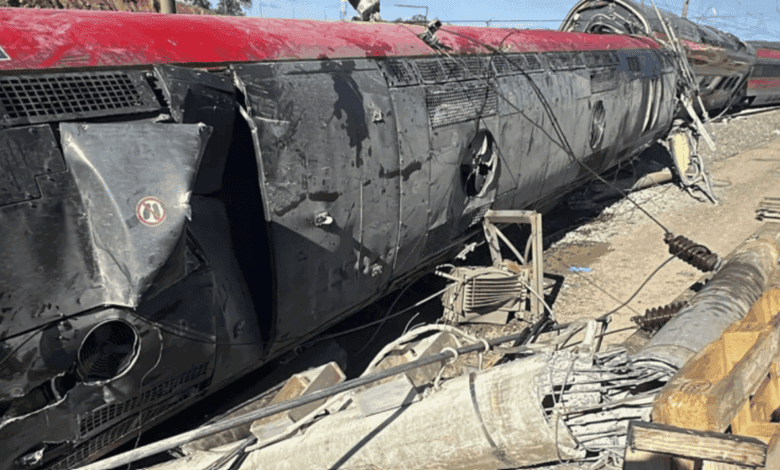
In Adamuz, Córdoba province, search and rescue teams have completed one of the most challenging phases of the operation: the bodies of two more victims have been recovered from the wreckage. It is now officially confirmed—45 people lost their lives in the train collision that occurred overnight Sunday. These two were the last individuals listed as missing. They were found in one of the mangled carriages, where there had still been hope of finding survivors until the very end.
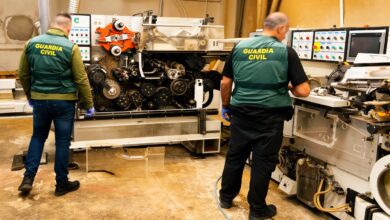
Since the tragedy, more than two hundred specialists have been working at the scene. They have not left the railway line, working day and night to clear the twisted metal and remove the carriages from the tracks. The operation involves not only rescuers but also military personnel, engineers, railway staff, and forensic investigators. Every step is coordinated with representatives of the Guardia Civil, as the investigation into the causes of the disaster runs in parallel with the recovery efforts.
Heavy losses
Among the victims are 22 women and 21 men, including a minor. Special attention has been drawn to three foreign nationals: citizens of Germany, Russia, and Morocco. Their identities, along with most of the other victims, have been established. However, the two bodies found today remain unidentified. The identification process is ongoing at the Institute of Forensic Medicine, where 43 victims have already been matched with names. Relatives have received 39 bodies, while the rest await completion of all formalities.
Work at the accident site is progressing slowly. The reason is the need to document every action for the investigation. Each movement of debris is accompanied by photography and official documentation. Investigators do not rule out the possibility that there may still be evidence under the rubble that could shed light on the causes of the tragedy. So far, none of the railway companies can specify when the work will be completed.
Equipment and personnel
The disaster zone is being served by four powerful truck cranes, excavators, platforms, and heavy machinery. Military personnel from the emergency response unit (UME) are coordinating efforts with engineers and railway workers. The President of Andalucía, Juan Manuel Moreno, personally visited the command center where specialists from Adif, Renfe, Iryo, and other companies are working.
So far, only two Iryo train cars—the seventh and eighth—have been moved. The eighth car, the only one that overturned, has already been taken to a nearby field. The seventh was lifted and placed on a platform. The sixth car remains at the site, where forensic experts are conducting inspections. The other cars, which did not derail, are expected to be towed away later once investigators grant permission.
Obstacles on the tracks
The situation is particularly complicated with the Alvia train. According to police, the last missing passengers were believed to be in its first two cars, which fell into a ravine. Access to these sections is extremely difficult: heavy machinery can’t reach them, so rescuers have to dismantle the structures by hand using hydraulic cutters. Workers are on site up to 14 hours a day, continuing their efforts even at night.
Work is also underway to level the railway platform for the installation of another crane, which will be used to lift the third and fourth railcars. However, neither Renfe nor Iryo are providing even approximate timelines for when the work will be completed. Until then, train service between Madrid and Andalucía remains suspended. Track restoration will not begin until investigative procedures are fully completed.
The investigation is ongoing
Dozens of Guardia Civil officers and Andalucía emergency response teams (GREA) are working at the scene. They are combing the area for evidence, photographing and documenting every item they find. Investigators are proceeding cautiously: the smallest detail could prove crucial in understanding why two trains ended up on the same track.
The commission investigating railway accidents has launched its own inquiry. While there are no official versions yet, one thing is clear: the tragedy in Adamuz is the most serious railway disaster Spain has seen in recent years. As rescue workers and forensic teams continue their efforts on site, the country is still waiting for answers to questions that haunt both the families of the victims and everyone following this story.