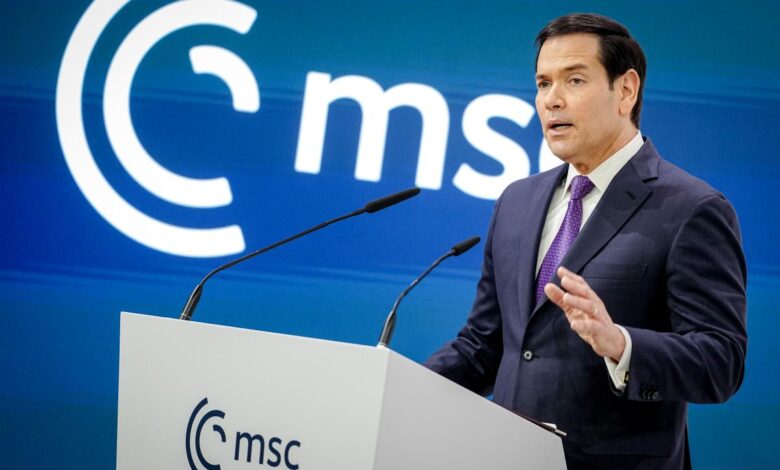
The future of relations between the US and Europe has returned to the spotlight following Marco Rubio’s speech at the Munich Security Conference. For Spain, as for other EU countries, such statements indicate potential changes in policies regarding security, migration, and international cooperation. Amid instability and new challenges, decisions made at such meetings impact not only economic stability but also the safety of citizens.
Speaking before European leaders, Rubio emphasized that the alliance between the US and Europe needs to be stronger to counter modern threats. He stated that restoring control over national borders is not an act of xenophobia, but a necessary condition for preserving sovereignty. According to him, this is the only effective way to respond to challenges related to migration and security.
The American politician pointed out that international institutions created by joint Western efforts require significant reform. He did not call for their dissolution, but stressed that without changes these structures will be unable to cope with new realities. Rubio recalled that it was US leadership which enabled negotiations between Israel and Palestine, as well as the release of hostages in critical situations.
The Power of Alliances
During his speech, Rubio emphasized that weak allies can weaken America itself. He urged European countries not to be ashamed of their history and not to be afraid to use their strengths. In his view, only self-confident partners are able to confront global threats and protect shared interests.
Rubio rejected the idea that the US seeks division. He stressed that Washington is interested in creating a strong alliance that will not be paralyzed by fears of war, technological change, or climate challenges. The main fear, he said, is missing the chance to make their countries wealthier and stronger.
He placed special emphasis on the need to collectively address past mistakes. Rubio reminded that Europe and the US had already faced catastrophic consequences from disunity in the last century. He expressed confidence that only close cooperation can prevent the tragic errors of history from being repeated.
A test for Europe
A call sounded in Munich for European countries not only to strengthen their defense but also to reconsider their approach to migration policy. For Spain, where border and migration issues remain among the most pressing, such statements could mean tighter controls and new demands from allies.
Rubio emphasized that Europe must be strong and independent to avoid becoming a hostage to external threats. He recalled that the fates of the Old and New Worlds are closely intertwined, and any changes in one part of the globe inevitably impact the other. Reflecting on the two world wars, he stressed that the lessons of the past should not be forgotten.
During discussions at the conference, it became clear that the US expects Europe to show greater independence and readiness for change. Spanish experts are already debating how potential reforms could affect the country’s domestic and foreign policy, as well as its relations with EU neighbors.
Context and consequences
In recent years, similar statements have been made amid growing global tensions and increasing migration flows. At a similar conference in 2024, issues of NATO reform and tighter controls on the EU’s external borders were discussed. At that time, many European countries, including Spain, supported maintaining a balance between security and humanitarian commitments.
In 2025, negotiations took place in Brussels to revisit migrant distribution agreements, sparking heated debates within the European Union. Spain was among the countries bearing the greatest burden for accepting refugees. These events highlighted the importance of coordinated policy and readiness for compromise.
The 2026 Munich Conference continued this discussion, but now the focus has shifted to the need to reform global institutions and strengthen alliances. For Spain and other EU countries, this presents new challenges and the search for a balance between national interests and international commitments.