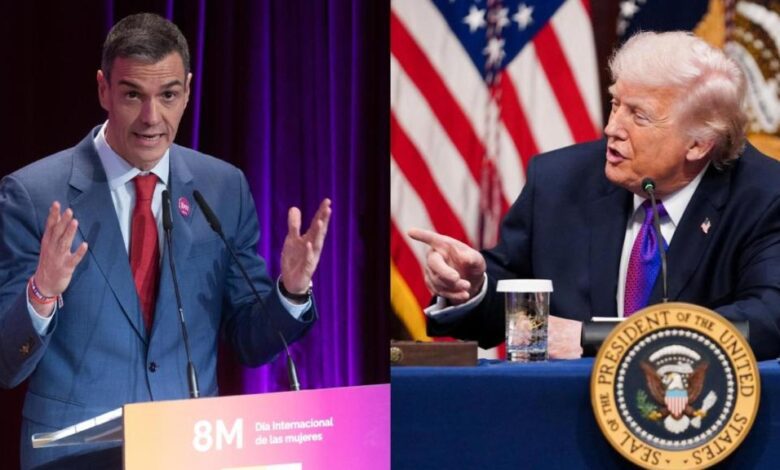
Pedro Sánchez’s decision not to support the US and Israeli military operation against Iran became one of the most discussed topics for Spaniards in 2026. This move immediately sparked a wave of both criticism and praise in American and British media, and it also raised questions about Spain’s economic stability. In a situation where the country relies on gas imports and external markets, any changes in relations with the US could have significant consequences for businesses and households.
According to Ale Espanol, leading US publications assessed Sánchez’s actions differently. The Washington Post and The New York Times highlighted him as a symbol of European resistance to Donald Trump’s policy, noting that the Spanish prime minister was not afraid to openly stand up to pressure from Washington. However, these same outlets do not rule out that Sánchez may be motivated by internal politics and an attempt to strengthen his position among left-wing voters amid falling approval ratings and scandals.
Reaction from US media
At the same time, The Wall Street Journal and other conservative outlets accused Sánchez of playing into Iran’s hands and deliberately provoking Trump for his own interests. Their publications described Spain as a ‘lagging’ NATO member, and Sánchez himself as a ‘brake’ on the Western coalition. Journalists noted that refusing to provide US military bases could lead to economic sanctions and a rise in energy prices.
Financial Times, in turn, called Sánchez ‘Trump’s European nemesis’ and warned of possible retaliatory measures from the US. According to British analysts, the current conflict could lead to tougher trade conditions for Spain, especially in the energy sector, where the country relies on American gas for nearly half of its supply. FT notes that if Washington imposes restrictions, this will impact the state budget and may lead to rising prices for the population.
Domestic motives
American journalists point out that this is not the first time Sánchez has entered into open conflict with the Trump administration. His criticism of US policies on migration, support for Israel, and stance on Venezuela has long been a topic of discussion in European capitals. However, the situation has now escalated: at stake is not only the country’s image, but also its economic security.
Experts believe Sánchez is counting on support from left-leaning voters, for whom anti-war rhetoric and distancing from the US seem appealing. However, such a course could result in losses for Spanish companies and rising unemployment if the US follows through with threats of trade restrictions. According to Ale Espanol, the government is already discussing possible scenarios and searching for alternative sources of energy.
International context
Amid heightened tensions with the US, other European leaders have chosen to take a more cautious stance. Many EU countries have refrained from openly supporting either side, wary of straining relations with Washington. Meanwhile, according to RUSSPAIN.COM, the Financial Times had previously named Sánchez as Trump’s main opponent in Europe, reaffirming his commitment to independence from American influence. This highlights that the current conflict is not a coincidence, but the result of a consistent policy in recent years.
The British press notes that attempts by other leaders to build ties with Trump through visits, gifts, and joint events do not always deliver the desired outcome. Sánchez, however, has chosen a path of open confrontation, making him a figure both respected by some and criticized by others. At the same time, experts warn that if the US imposes sanctions, Spain could face gas shortages and rising electricity prices.
Background on the topic
In recent years, relations between Spain and the United States have repeatedly sparked heated debates. In 2024, a similar situation arose after Madrid refused to raise military spending to the level required by NATO. Washington then threatened trade measures, but the two sides managed to reach an agreement. In 2025, the issue of liquefied gas supplies came up, and Spain had already experienced disruptions due to political disagreements. Such conflicts show that the country’s foreign policy directly impacts the economy and the daily lives of its citizens.