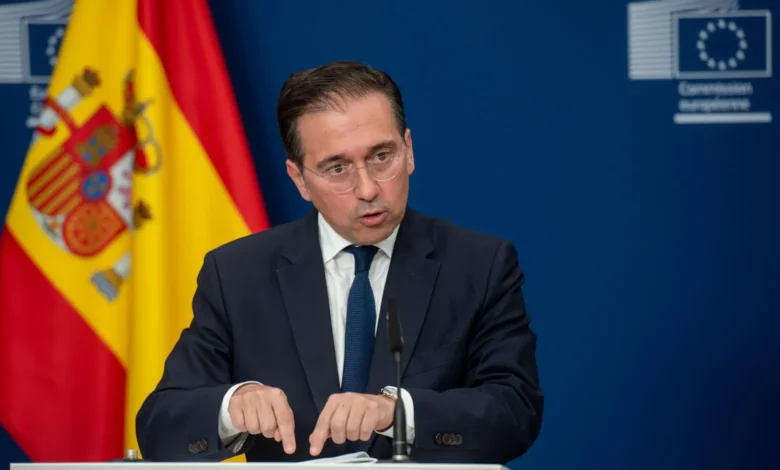
At the beginning of 2025, the Spanish government decided not to include the Valencian language in the list of official languages of the European Union. This move sparked a sharp reaction from Carlos Mazón’s administration and the regional branch of the Partido Popular in the Valencian Community.
Spain’s Foreign Minister, José Manuel Albares, confirmed that the official request to the European Commission concerns only Catalan, Basque, and Galician. Despite its status enshrined in the Constitution and the Statute of Autonomy, Valencian was left out. According to the minister, only these three languages have been proposed for official status, and Madrid’s position on this matter will not change.
In Valencia, the decision was perceived as a deliberate disregard for regional identity. Representatives of the regional government believe that the refusal to recognize Valencian at the European level infringes on the rights of the autonomous community’s residents and contradicts the country’s fundamental laws. Carlos Mazón insists on a public change of the minister’s position and demands respect for the dignity of more than five million residents of the region. Should this request be denied, the Partido Popular plans to initiate a motion of no confidence against the minister in the regional parliament, counting on support from Vox.
The authorities of Valencia emphasize that the issue is not limited to linguistic aspects but is related to political concessions in favor of independence supporters. According to regional leaders, Madrid deliberately excludes the Valencian language to avoid strengthening the region’s position and acknowledging its uniqueness.
The discussion has gone beyond Spain and has become a matter for consideration within the structures of the European Parliament. In January, Parliament Vice-President Esteban González Pons asked the research service to clarify the status of all the country’s official languages. The final document listed Galician, Basque, Catalan, as well as Aranese and Valencian. Representatives of Valencia believe that these languages should enjoy equal status in the EU.
Despite this, the Spanish government continues to promote only three languages. Even on the official websites of nine ministries—including finance, labor, defense, and transport—there is no option to select the Valencian language. In some cases, information for those affected by natural disasters is published only in Catalan. Other agencies, including the government website, do provide access to information in Valencian.
The question of the status of the Valencian language remains unresolved and continues to spark debate both within the country and at the European level.