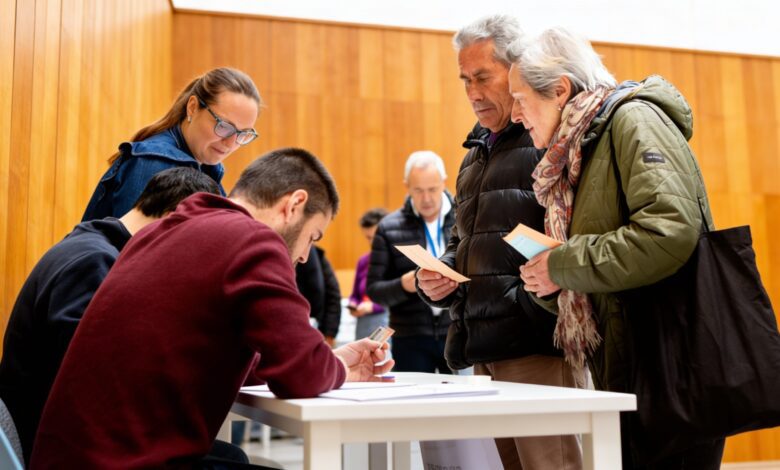
The morning voting results in Castilla y León came as a surprise to many residents of the region. By 11:30 a.m., turnout had already surpassed that of previous years, potentially shifting the balance of power in local politics. According to El Pais, voter participation increased in nearly every province—an indicator of heightened public interest in these elections and possible changes in the governance of the autonomous community.
El Pais reports that by this time, 12.63% of voters had already cast their ballots—1.33 points higher than four years ago. In absolute numbers, that’s 240,997 people who have already made their choice. This uptick in turnout is seen across all provinces, though differences do exist between them. León saw the biggest increase at plus 1.83 points, while the smallest was in Ávila, where turnout rose by just 0.55 points.
Provinces and figures
Among all provinces in Castilla y León, Soria led in voter turnout, with 13.73% of the electorate (9,270 people) casting ballots by 11:30 a.m. Next were Segovia at 13.06% (15,192), Valladolid at 12.97% (54,612), Palencia at 12.79% (16,494), Salamanca at 12.72% (34,016), Burgos at 12.71% (35,260), Ávila at 12.45% (15,674), Zamora at 12.43% (17,134), and León at 11.84% (43,345). These figures show that interest in the election is unevenly distributed, with some areas showing much higher engagement than others.
The increase in turnout may be linked to changes in the political landscape, new candidates, or issues that are currently relevant to the region. It is important to note that even a slight rise in the percentage of voters can impact the final allocation of seats in local government. In some provinces, the difference between parties is traditionally minimal, so every vote takes on special significance.
Reasons for voter activity
Analysts point out that higher turnout may be related to intensified competition among political forces and an active election campaign. In recent weeks, the region has been discussing issues concerning the economy, employment, and social support, which could have motivated more citizens to go to the polls. Additionally, several municipalities organized extra informational campaigns aimed at raising awareness about the importance of voting.
The influence of new technologies and digital platforms should also not be underestimated. Many voters received reminders about the election date via online services, which may have contributed to the increase in turnout. In an environment where the political situation in Spain remains tense, even small changes in civic engagement can serve as a signal to parties and analysts.
Context and trends
In recent years, voter turnout in Castilla y León has fluctuated, reflecting broader national trends. In 2022, participation was lower, which was attributed to voter fatigue and the absence of major political events. However, the current elections are taking place amid new challenges and expectations, which experts believe has sparked greater interest in voting.
As El Pais notes, all provinces in the region have shown positive dynamics, although the gap between them remains significant. It is important to monitor further developments, as the final results may differ considerably from the preliminary figures. In the past, similar surges in turnout have led to unexpected outcomes and shifts in political priorities in certain provinces.
Looking back at previous elections in Castilla y León, similar spikes in voter activity were seen in 2019, when economic difficulties and social protests also drove turnout higher. At that time, this resulted in a redistribution of seats in parliament and the emergence of new political forces. In other regions of Spain, such as Galicia and Andalucía, higher turnout in recent years has also brought changes in the power structure and increased competition between parties. These examples show that even small changes in voter activity can have long-term effects on the region’s political life.