The special award presented to Juan Carlos I in France has once again drawn attention to the former monarch’s role in Spain’s history. For Spaniards, this is more than a ceremony: international recognition of the ex-king’s achievements underscores the country’s complex relationship with its recent past and sparks new debates about the monarchy’s place in modern Spain. The decision by the French authorities to honor Juan Carlos I’s memoirs, despite his controversial reputation at home, could influence how Spain is perceived both abroad and within its own borders.
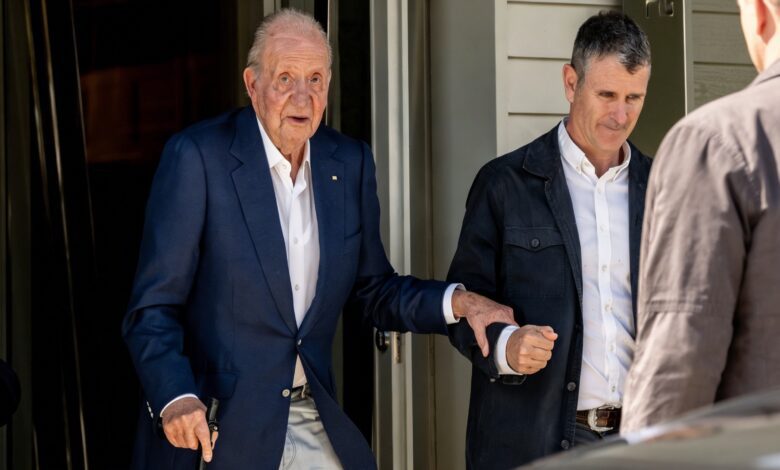
The award ceremony took place in the Assembly Hall of France’s National Assembly, a building once central to the fate of French monarchs. According to El Pais, the event was marked by respect and keen interest in the former Spanish king. Despite appearing tired and noticeably frail, Juan Carlos I delivered a speech recalling his role in Spain’s transition to democracy and expressing gratitude to the French for their recognition. He emphasized that safeguarding democracy and human rights had always been his top priority, while not sidestepping recent scandals associated with his name.
Reaction and controversy
The ceremony itself did not have official political status, but the venue and the presence of high-ranking figures, including Assembly President Yaël Braun-Pivet, lent the event special significance. Some finalists of the literary contest expressed surprise at the selection of the laureate, arguing that such a controversial figure should not receive public recognition in France’s key political institution. However, the organizers insisted the prize honors contributions to literature and historical memory, not political activity.
Historian Annette Wieviorka, who presented the award, specifically highlighted Juan Carlos I’s role in preventing the escalation of the military coup on February 23, 1981. For the French public, the former Spanish monarch remains associated with democratic reforms, even though his reputation has suffered significantly in Spain in recent years. According to El Pais, after the ceremony, an official lunch took place involving contest finalists and members of Juan Carlos I’s family, further underscoring the event’s importance.
Context and implications
The public appearance of Juan Carlos I in France was his first since his trip to Paris in February 2023, when he accompanied Mario Vargas Llosa to a ceremony at the Académie Française. Then, as now, the former king attracted significant attention, sparking lively discussion in both Spanish and French media. The award organizers stress that their interest is solely connected to the book ‘Reconciliación,’ co-authored by Laurence Debray, and that the contest rules allow no exceptions for laureates regardless of their status.
In Spain, however, the event has sparked mixed reactions. For some, Juan Carlos I remains a symbol of the country’s transition to democracy; for others, his reputation has been undermined by recent financial investigations and scandals. According to El Pais, probes that began in 2018 revealed complex financial schemes involving funds in Switzerland and Liechtenstein, as well as large transfers linked to foreign entities. These facts led the current king, Felipe VI, to renounce his inheritance and publicly distance himself from his father’s affairs.
A View from Spain
The reaction of Spanish politicians and the public to the French award has been notably restrained. Many see this event as an attempt to reconsider the role of the monarchy in modern Spain and as a reminder of the country’s complex historical chapters. At the same time, according to russpain.com, such international recognition could spark new debates about the future of the monarchy and the need to reform the royal institution.
Interestingly, attention to Juan Carlos I remains high within Spain itself. Recently, his stay in the country once again became a topic of discussion when he extended his visit due to participation in regattas in Galicia and changes to his schedule related to the French award. Further details on these events can be found in the article on why the former king stayed in Spain longer than usual.
Background and related events
In recent years, the awarding of international honors to politicians and public figures whose reputations are controversial at home has become increasingly common. For example, in 2024, a similar situation occurred when former French President François Hollande received an award for his contribution to European integration, which sparked intense debate within French society. In Spain, debate around the monarchy and its representatives remains relevant, especially amid new publications and investigations. These events highlight how closely questions of historical memory, politics, and public opinion are intertwined in modern Europe.