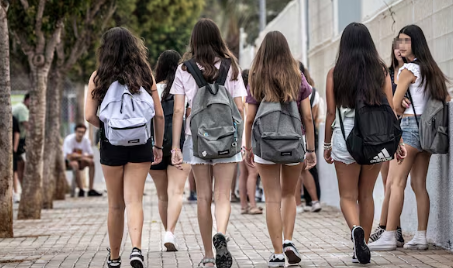
Over the past decade, Spain has significantly reduced the proportion of young people leaving school before obtaining vocational qualifications. In 2014, this figure was almost 22%, but by 2024 it had dropped to 13%. However, despite this progress, the country still ranks among the lowest in the European Union by this metric. Only Romania performs worse.
The root causes of this persistent problem lie not only in the education system, but also in the country’s economic structure. In regions dominated by sectors that require little qualification—such as tourism, agriculture, or construction—teenagers are more likely to leave school for quick employment. In Murcia and the Balearic Islands, the early school-leaving rate exceeds 18%. Meanwhile, in the Basque Country and Navarre, where industry and technology are more developed, this rate is less than 10%.
Economy sets the rules
When the job market offers an easy start without a diploma, many young people choose work over further education. At first glance, this may seem like a good decision, but in reality it leads to a vicious circle: low qualifications — low wages — no prospects. As a result, it’s not just the individual who suffers, but the entire economy, losing productivity and competitiveness.
In countries where employers value education and require professional skills, the situation is different. Germany, Austria, and the Scandinavian countries have almost completely solved the problem of early school dropout because their economies need skilled workers and offer work-based training.
A dual approach: education and work
For Spain, it is important not only to improve the school system but also to change how young people enter the workforce. As long as it is possible to get a job without a diploma, the problem will persist. One possible solution is to make obtaining a professional qualification mandatory for everyone who wants to begin working. This means that teenagers who have not completed secondary education would only be able to work under a contract that combines training and hands-on experience until they receive the required qualification.
This is not a restriction, but a way to protect young people from falling into the trap of low-paid and unstable jobs. A first work experience should be not just a step into a career, but also a chance to gain valuable skills. Such a system would align the interests of schools, businesses, and the government, and help young people build a more stable future.
What else needs to change
Expanding access to vocational education is crucial for the success of the reform, especially in rural areas and small towns. New study programs need to meet modern demands: digital technology, environmental studies, renewable energy, and caregiving. Equally important is implementing quality career guidance as early as secondary school, so that teenagers understand the opportunities that different educational paths can offer.
Cooperation between schools, companies, trade unions, and employment services should become a regular practice. This will help integrate learning with practical experience and make the transition from education to employment smoother. For low-income families, extra scholarships and financial aid are necessary to ensure education does not become a luxury.
Another key step is recognizing and officially certifying the skills of those who already work without a diploma. Flexible training programs can help these individuals gain formal qualifications and improve their mobility on the job market.
Spain cannot build the economy of the future if a significant share of its youth is left without education or prospects. Tackling the issue of early school leaving is not just an educational challenge, but a strategic choice for the whole country. Only comprehensive action—uniting reforms in schools and the labor market—will break the vicious cycle and give young people a fair chance at a decent life.