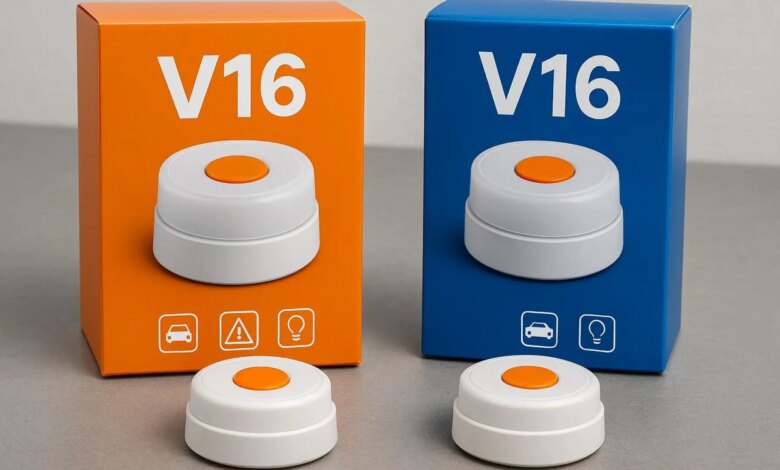
Starting January 1, 2026, a new road safety standard takes effect in Spain: only V16 beacons with network connectivity will be allowed for emergency signaling on cars and other four-wheeled vehicles. A large-scale business has emerged around these devices, dominated by manufacturers from China. The Spanish market is flooded with virtually identical beacons, sold under different brands and with various certificates.
This situation raises questions among experts and consumers alike: why can the same product have dozens of official approvals and be sold under different names? The answer lies in the nuances of the certification process, which is overseen by laboratories accredited by the Dirección General de Tráfico (DGT). These labs issue certificates for products, and often a single model receives multiple approvals, allowing distributors to market it under different brand names.
Chinese Manufacturers and the V16 Market: Who Controls the Supply
As of today, 243 models of V16 beacons are officially registered in Spain, but only 29 companies are responsible for their production. Of these, just seven are Spanish, while the rest are foreign, mostly from China. Chinese distributors such as Limburg Technology Limited have obtained the largest number of certificates and now control almost half of the market’s offerings.
Limburg Technology Limited stands out in particular, offering 110 different V16 beacon models—making up 45% of all available options. Many of these models are nearly identical but are sold under different brands and certificates. This strategy allows one company to cover multiple market segments by offering essentially the same product under various names and price points.
Certification and Model Duplication: How the System Works
The certification process for V16 beacons in Spain is carried out by two main laboratories: LCOE (Laboratorio Central Oficial de Electrotécnica) and Applus IDIADA. Only these organizations are authorized to issue official sales permits for the devices. However, in recent years, it has become clear that the same models are certified multiple times, receiving different license numbers.
As a result, the market is flooded with dozens of identical devices that differ only in packaging and branding. For example, the V16 Beacon Light IoT CH-019 model produced by Limburg Technology Limited holds 44 different IDIADA certificates and is sold under 44 different brands. For consumers, this means that the choice between brands is often an illusion—the product inside the box is the same.
Spanish Manufacturers at a Disadvantage
Against the dominance of Chinese companies, Spanish manufacturers are at an obvious disadvantage. Of the 29 companies licensed to produce V16 beacons, only seven are based in Spain: Oversunenergy, Mirovi, Plásticos Erum, Broad Telecom, Energía Eléctrica Eficiente, Atressa Global Corporation, and Kepar Electrónica. Together, they produce just 29 models, while foreign manufacturers offer 214 options.
The main reason is the difference in production costs. Manufacturing in China is significantly cheaper, allowing Asian companies to offer their products at lower prices. Spanish balises, in contrast, are more expensive, which reduces their competitiveness. Even major local players such as Mirovi and Kepar Electrónica cannot compete with the scale and pricing strategies of Chinese suppliers.
Impact on the market and consumers
The widespread duplication of models and dominance of foreign manufacturers are making the Spanish V16 balise market increasingly opaque. Buyers are faced with an overwhelming range of options that are, in reality, an illusion: the same product is marketed under different brands. This not only misleads consumers but also calls into question the effectiveness of the certification system.
At the same time, Spanish companies are losing ground, leaving the national industry at a disadvantage. The need to reform the certification system and support local manufacturers is becoming more pressing as the deadline for mandatory implementation of new standards approaches.
In case you didn’t know, Limburg Technology Limited is one of the largest distributors of electronic devices for vehicles in Europe. The company specializes in the production and supply of emergency beacons as well as other safety systems for transportation. Thanks to a wide network of partners and a flexible pricing policy, Limburg Technology Limited holds a leading position in the Spanish market and other EU countries. In recent years, the company has been actively expanding its product range and increasing its presence in the road safety device segment.