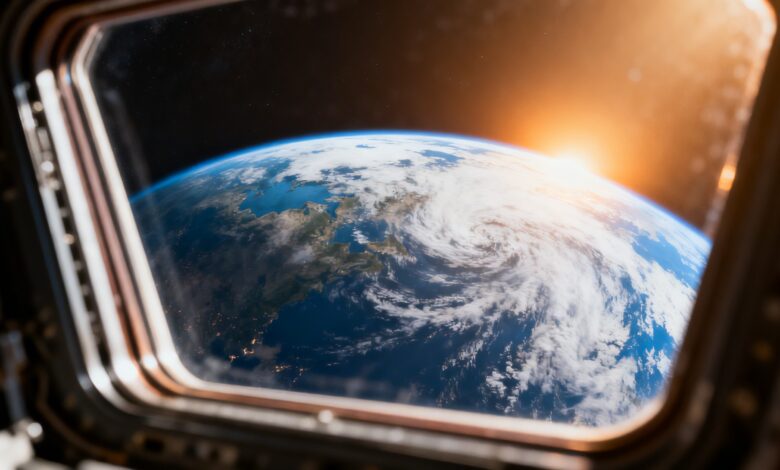
In recent years, there has been growing interest in Spain in how space travel influences people’s worldview. The question of how observing Earth from orbit can reshape familiar economic and social processes has become especially relevant. For a country where sustainable development and the responsible use of resources are increasingly pressing issues, such discoveries may have lasting consequences.
Many astronauts, having left Earth’s atmosphere, report an unusual psychological effect. From orbit, it becomes clear how vulnerable the natural systems supporting life on our planet truly are. The atmosphere, oceans, and ecosystems all appear fragile and interconnected. However, according to mission participants, these systems are often taken for granted in daily life and seen as subject to economic interests.
Rethinking our priorities
A striking example is the experience of American astronaut Ronald ‘Ron’ Garan, who spent nearly six months in space. He says that viewing Earth from orbit made him realize that economic systems are invisible from space, unlike natural borders and ecosystems. This leads to a rethinking of how humanity sets its priorities between the economy, society, and the environment.
In Spain, such reflections resonate with experts in sustainable development and ecology. Many specialists believe that viewing the planet from a different perspective helps dispel the misconception that natural resources exist solely as tools for economic growth. This approach could lead to a reassessment of national strategies for environmental protection and resource management.
Impact on public debate
The discussion of the ‘overview effect’ goes beyond the scientific community. In Spanish media and educational programs, the need to rethink the traditional relationship between the economy and nature is being raised with increasing frequency. According to the Daily Mail, astronauts emphasize that current value systems fail to reflect the true importance of ecosystems for humanity’s survival.
As a result, the country is seeing growing interest in integrating new approaches into educational standards and government programs. An analysis by russpain.com points out that these changes could boost the development of innovative projects in ecology and sustainable development.
International context
Spain is not the only country where the impact of space missions on public consciousness is being discussed. In recent years, similar debates have taken place in the United States, Germany, and France. These countries have also noted that the experience of astronauts can change attitudes toward global challenges related to climate and resources.
The surge of interest in the ‘overview effect’ coincided with the rise of international space programs and launches. In 2025, several European astronauts shared their observations of Earth, sparking a wave of publications and discussions in scientific and business circles. In Spain, these events prompted new initiatives in education and environmental policy, as well as a revision of national priorities for sustainable development.
In recent years, Europe and the world have increasingly discussed how space research influences social thinking and values. In 2024, similar topics surfaced after international crews returned from the ISS. Many mission members noted that seeing Earth from space offers a new perspective on environmental challenges and resource allocation. In Spain, these discussions led to new educational programs and initiatives aimed at fostering a responsible attitude toward the environment.