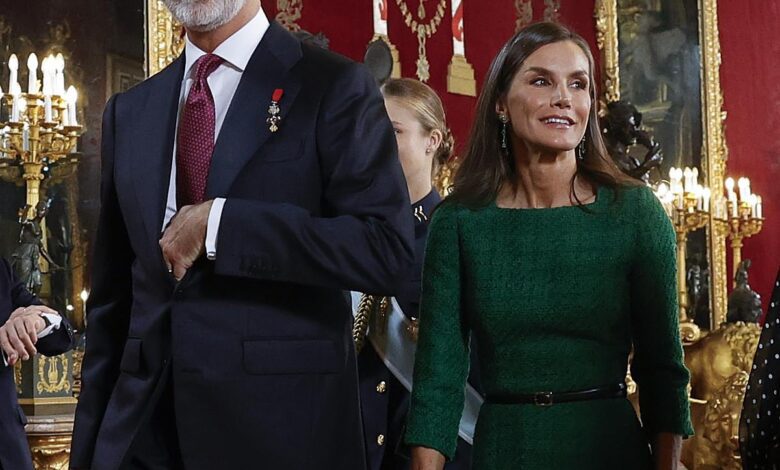
In recent years, the Spanish king’s Christmas address has drawn attention not only for its content but also for the format and those involved in the event. Queen Letizia’s role stands out in particular, as many see her as the main driving force behind the monarchy’s evolving public image. Although she does not appear on camera during the address itself, Letizia’s influence on its style and delivery has become increasingly evident.
The question of whether the king’s wife can appear on air with him is more complex than it seems. There is historical precedent: in the late 1970s, Queen Sofía appeared alongside King Juan Carlos with their children during his New Year addresses. At the time, this was seen as an effort to underscore family values and dynastic unity in a challenging period for the country.
Tradition and Change
Since then, the format of the address has changed. In recent decades, European monarchs have preferred to deliver their speeches alone, focusing on personal responsibility and a direct message to the people. In Spain, after 1980, the queen and children no longer appeared on camera during official speeches. This became an unspoken standard, highlighting the monarch’s special role as the sole voice of the crown.
However, Letizia’s arrival in the royal family marked a new era. A former journalist, she is actively involved in communication and image matters, bringing a modern touch to traditional formats. Thanks to her influence, the Christmas address in recent years has become shorter, more dynamic, and visually engaging. The setting for the broadcast has shifted to more ceremonial halls, and now the king more often delivers his speech standing, adding extra energy to his address.
Letizia’s Influence
Although Letizia does not appear on screen, her touch is evident everywhere—from the choice of location to the editing of video messages. The royal family’s new holiday greetings look modern and align with the expectations of the 21st century. Even critics admit these changes bring the monarchy closer to the public and make it more relevant for the younger generation.
Nevertheless, the question of whether Letizia might appear in the Christmas broadcast remains open. On one hand, returning to the practices of the 1970s could symbolize openness and family unity. On the other, modern European traditions favor a different approach, where the monarch speaks alone and other family members remain off-camera.
Historical Background
Looking back at King Juan Carlos’s first addresses, it’s worth noting that the presence of Queen Sofía and their children was mostly formal. They were nearby, but didn’t take part in the speech, showed no emotion, and sometimes didn’t even look at the camera. This created a certain awkwardness and underscored the distance between the monarchy and society.
In 1980, the format changed: the king remained alone in front of the camera, and the family disappeared from the frame. Since then, no Queen of Spain has appeared in the Christmas broadcast. In other European countries, the situation is similar—monarchs prefer to address the nation personally, without the presence of their spouses or children.
Modern expectations
Today, Spanish society has mixed feelings about the possible appearance of Letizia on air. For some, it would be a step toward greater openness; for others, a break from established tradition. In any case, the queen’s influence on the palace’s communication strategy is undeniable. Her ideas and approaches have already transformed the public perception of the monarchy in the eyes of millions of Spaniards.
This year, the king’s Christmas address drew nearly six million viewers to their screens. Although this is one of the lowest figures in history, public interest in the format’s details and potential innovations remains undiminished. Each year, the audience anticipates how the royal family might surprise them and what changes the next broadcast will bring.