In recent months, Spain has seen a rise in sophisticated online fraud involving fake bank accounts. This new wave of crime has affected several regions across the country, raising concerns among residents and security experts. According to El Pais, an arrest in Tarragona has become one of the most notable cases in the ongoing fight against these scams.
Scheme and Scale
In August last year, a major fraud complaint was filed in Irún involving inter-account transfers totaling €30,000. The investigation revealed that the perpetrators used the ‘hijo en apuros’ scheme: the criminal would pose as the victim’s son or daughter, report an urgent problem, and ask for money to be transferred to a new account number. This method quickly spread to various regions, and similar complaints soon appeared in Murcia, Valencia, and Tarragona.
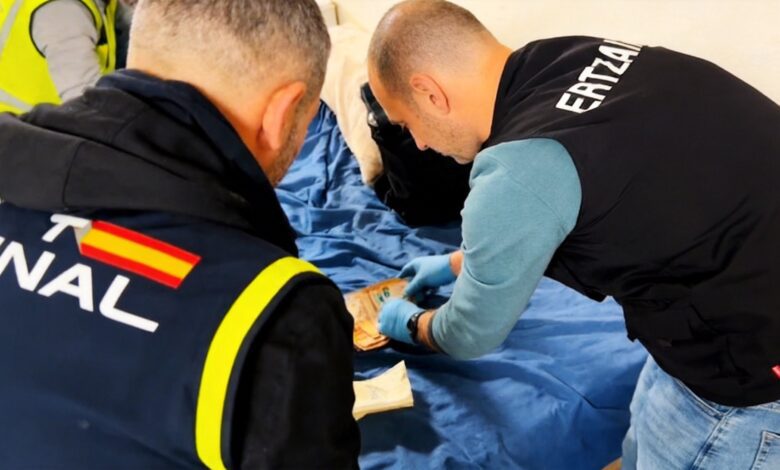
During a joint operation by Ertzaintza and Policía Nacional, authorities identified a woman who was offering payment in exchange for opening bank accounts. She sent instructions via social networks, explaining how to open an account and hand over access to it. Afterward, the account holders lost control over their accounts, which were then used by fraudsters to move stolen funds.
Details of the Arrest
A woman residing in Riudoms has been identified as a key figure in organizing the scheme. Information about her was passed on to CITCO (Centro de Inteligencia contra el Terrorismo y el Crimen Organizado), where coordination between different police units began. The operation concluded on March 10 with a search of her home, resulting in the seizure of €3,400 in cash, a laptop, several mobile devices, and a large number of SIM cards that were used to communicate with victims and accomplices.
According to RUSSPAIN.COM, such schemes are becoming increasingly sophisticated, with organizers actively using digital channels to recruit new participants. In this case, the detained woman, just 22 years old, offered money for opening accounts and then used them to conceal the traces of crimes. The total damage caused by the group’s activities exceeded €96,000, and the investigation is ongoing.
Related investigations
The operation in Tarragona forms part of a broader campaign against financial crime in Spain. Police note that such schemes often overlap with other types of fraud, including corruption and money laundering. For example, public attention was recently drawn to an investigation into suspicious bank operations in Almería, where it was found that the mortgage of a former official was paid in cash with unclear origins. More details about this case are available in the article on the investigation into suspicious transfers in Almería.
During the search of the detainee’s home, police found not only cash and electronics, but also numerous bank cards, indicating a widespread network of accomplices. Investigators do not rule out that the number of victims and the total losses may increase after analyzing the seized materials. The operation remains ongoing, and police expect more arrests.
Context and trends
Spain is facing an increase in crimes involving so-called bank ‘mules’—individuals who, for a fee, open bank accounts and hand them over to fraudsters. These schemes enable criminals to complicate the tracking of financial flows and make investigative work more difficult. In recent years, such cases have been recorded not only in major cities but also in smaller towns, highlighting the scale of the problem.
A surge in bank account fraud is also being observed in other European countries, but in Spain, the situation is aggravated by the active use of social networks to recruit new participants. Police urge citizens to be cautious and refuse offers to open accounts for money, so as not to become part of a criminal scheme.
In recent years, Spain has repeatedly uncovered large-scale schemes involving so-called bank mules. For example, in 2024, authorities in Madrid exposed a group that recruited students via messaging apps to open accounts, later using them to transfer funds obtained through online fraud. Similar incidents have been reported in Catalonia and Valencia, where both pensioners and young people—often unaware of the consequences—became victims. Police continue efforts to detect new schemes and warn the public about potential risks.