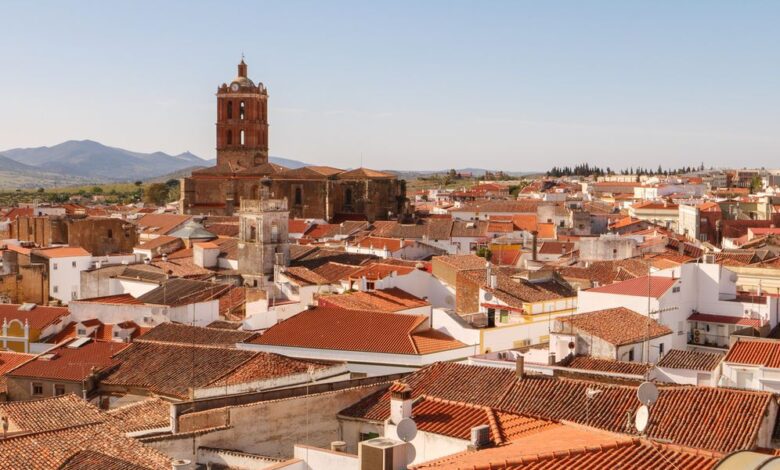
In the heart of southern Extremadura, between Merida and Seville, lies the charming town of Zafra. It is often called the “little Seville”—and for good reason: its whitewashed streets, hidden courtyards, and ancient monasteries create an atmosphere where time seems to stand still. When October arrives and the heat fades, the air fills with gentle light, and Zafra reveals its special charm.
The city’s history dates back to the 14th century, when the impressive Alcázar was built here—a Renaissance-era fortress and palace in one. Today, it houses one of the country’s most beautiful paradores, where a marble courtyard invites guests to linger. Strolling around the Alcázar is a journey through the centuries: the old walls, gates like the Arco de Jerez and Arco del Cubo, and mansions with wrought-iron balconies are especially picturesque in the autumn light.
In the past, Zafra was an important trading hub, home to a thriving Jewish community with bustling life under the arcades of its two main squares—Plaza Chica and Plaza Grande. On the former, you can still see the stone measuring stick—the ‘vara de Zafra’—once used by merchants for fair trade. This symbol of enterprise continues to remind visitors of the town’s enduring commercial spirit.
The narrow streets of the historic center, such as Calle Sevilla and Calle Jerez, are home to many architectural surprises. Here, you’ll find the Casa Grande de los Daza Maldonado with its Renaissance courtyard and monumental staircase, as well as the Casa del Ajimez—an example of Mudejar art. But perhaps the most atmospheric place is the former Santa Clara monastery, now a museum. Within its walls, the Clarisas nuns still prepare traditional sweets, and visitors can explore the church, sacristy, and cloisters built between the 15th and 17th centuries. White facades, blooming courtyards, and monasteries make Zafra one of the most photogenic towns in the region.
October is the perfect month for strolling these streets. By day, it’s pleasant to sit on a terrace, and in the evening, to watch the city come alive.
Zafra Gastronomy: From Tradition to Haute Cuisine
But this city isn’t known for its architecture alone. Zafra has long been a magnet for gourmets. The town’s culinary venues are featured in the Michelin Guide, and local restaurants surprise with their blend of tradition and new flavors. At Acebuche, run by Carmen Peláez and Javier Gassibe, the classics of Extremadura meet Argentinian influences. At La Rebotica, the focus is on local ingredients: lamb, cod, aged cheeses, and Ribera del Guadiana wines turn dinner into a true event. Sampling dishes at these establishments is an essential part of discovering the city.
In Zafra, it’s easy to combine walks through historic sites with culinary discoveries. Here, everyone will find something for themselves—be it architectural masterpieces, cozy squares, or exquisite dishes. Autumn in this city is a time that makes you want to return again and again.