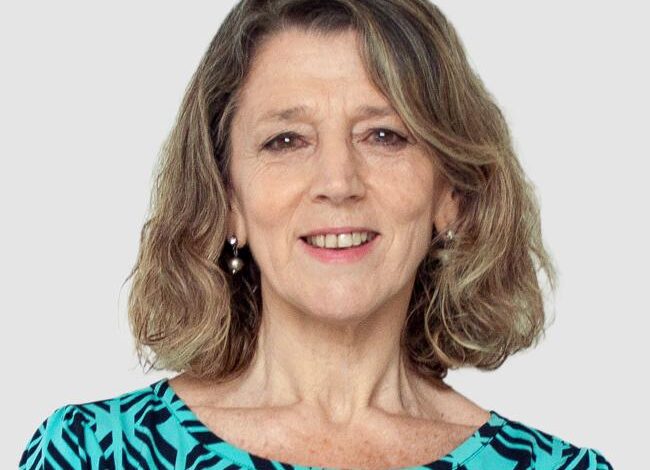
While one of the Zorreguieta sisters wears the crown of the Netherlands, the other has devoted her life to unlocking the secrets of the molecular world. Ángeles Zorreguieta, Queen Máxima’s elder sister, chose a path far removed from palace intrigue and the public eye, becoming one of Argentina’s leading scientists. Their shared roots tie back to Argentina, and their Basque surname seems to hint at the determination and perseverance each sister has shown in her own field.
Ángeles’s academic journey was shaped by her brilliant mind and passion for knowledge. She graduated in chemistry from the Faculty of Exact and Natural Sciences at the University of Buenos Aires in 1983. The pinnacle of her education came five years later, when she defended her doctoral thesis. This stage of her career was especially significant, as her academic advisor was none other than Nobel laureate Luis Federico Leloir. Ángeles became his last student, absorbing knowledge and research methods from one of the greatest minds of his era—a foundation, without a doubt, for her future accomplishments.
After gaining invaluable experience in her homeland, Angeles moved to Europe to further her development. She completed her postdoctoral studies in molecular microbiology in Norwich, England, working at the international genetics center John Innes Centre. This period allowed her to immerse herself in cutting-edge global research and establish important scientific connections. However, in 2001, despite promising opportunities abroad, she decided to return to Buenos Aires. Driven by a desire to contribute to the advancement of Argentine science, she joined the research team at the Fundación Instituto Leloir and began teaching at her alma mater.
Her career in Argentina progressed rapidly. Her talent and dedication led her to the position of director of the Instituto Leloir in 2017. Under her leadership, this prestigious institution continues its fundamental research, including the development of drugs to combat cancer. One of Angeles’s team’s most significant achievements came in 2015, when researchers identified the key role of a specific molecule. This discovery paves the way for creating more effective fertilizers and, most importantly, for fighting antibiotic-resistant hospital-acquired infections.
Ángeles Sorreguieta’s contribution to science is immense: over seventy publications in prestigious international journals and eleven doctoral dissertations successfully supervised under her guidance. She has built not only a scientific legacy, but also a strong family where science plays a central role—her husband, Adrian Voinov, is also a renowned scientist. Despite her close relation to one of Europe’s most famous royals, Ángeles deliberately stays out of the spotlight, preferring her scientific achievements to speak for her rather than family ties.