In early June, an incident occurred at SpaceX’s test site in Texas that could have seriously delayed the ambitious Starship V3 program. The first stage of the new generation, Booster 18, suffered significant damage during a fuel system check. Although the engines had not yet been installed and no personnel were injured, the loss of such a critical component raised concerns among experts and space launch enthusiasts. Many expected that work on Starship V3 would be suspended or significantly slowed down.
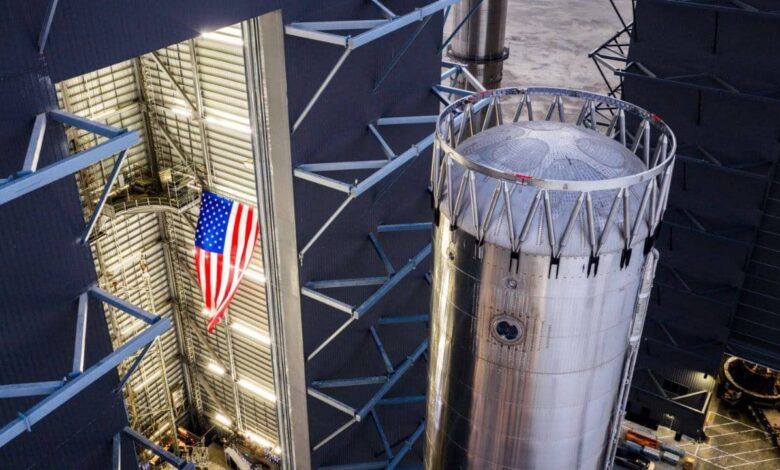
However, SpaceX wasted no time. Just a few days after the accident, the fourth section of the next stage—Booster 19—was delivered to the MegaBay site. Assembly progressed so rapidly that within five days the structure had reached a height of 15 rings, with only a few elements left to complete construction. This pace set a new record in the history of the project. Inside the company, this success was seen as confirmation of the chosen strategy and the efficiency of its production processes.
Assembly rates
The assembly of Booster 19 marked a real breakthrough for SpaceX. Previously, such work took weeks, but engineers and workers now completed it in just five days. Not only is this an impressive result, it also sends an important message to the entire industry: despite setbacks, the company can quickly respond to emergencies and restore its production speed.
Inside MegaBay, work was in full swing: specialists worked in shifts to prevent any delays. Every stage was carefully monitored, and any issues were promptly resolved. This approach not only helped make up for lost time but also took efficiency to a new level. As a result, Booster 19 became the fastest-assembled Starship component in the program’s history.
Future Plans
Despite the setback with Booster 18, SpaceX has officially confirmed that the twelfth Starship test flight is still scheduled for the first quarter of 2026. Company head Elon Musk has repeatedly emphasized that the V3 version will be a major step forward compared to the previous V2. According to him, all necessary manufacturing and testing stages are expected to be completed by the end of this year, with an intensive program of flight tests slated to begin next year.
Experts note that such a rapid transition from the accident to new achievements highlights SpaceX’s high level of readiness to tackle complex challenges. The company not only minimized the aftermath of the incident, but also demonstrated its ability to quickly adapt to changing conditions. This is especially important given the intense competition in the space launch market.
Significance for the Industry
Starship V3 is seen as a pivotal project for future missions to the Moon and Mars. The successful assembly of Booster 19 following the Booster 18 accident has reinforced confidence in SpaceX’s ability to achieve its ambitious goals. The company’s rapid production pace and ability to quickly resolve issues make it one of the leaders in the global space industry.
In the coming months, Booster 19 assembly is expected to be completed and new tests will begin. If the current pace continues, a launch in the first quarter of 2026 is becoming increasingly realistic. The progress is closely monitored not only by experts, but also by space technology enthusiasts around the world.
In case you didn’t know, SpaceX is a private aerospace company founded by Elon Musk in 2002. The company is known for its innovative breakthroughs in reusable rockets and crewed spacecraft. Starship is SpaceX’s flagship project, designed for interplanetary missions and delivering cargo to the Moon and Mars. The company regularly sets records for assembly and launch speeds, and its achievements are closely watched both in the US and abroad.