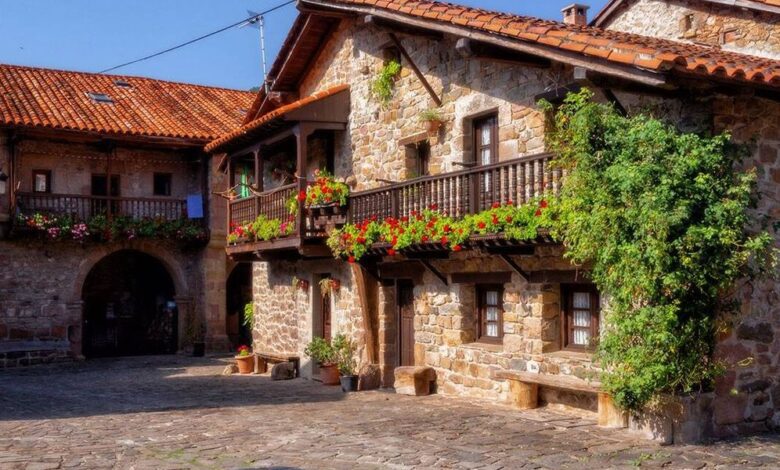
In the heart of the Saja-Besaya nature reserve, sheltered from the bustle of modern life, lies a mountain village that this year received an honorary title. It is the only inhabited settlement in the entire protected area, and its authenticity won over the jury of a prestigious regional competition. Arriving here feels like taking a step back in time. Cobbled streets, stone houses with carved wooden balconies adorned with flowers, all create the atmosphere of a living historical film set. An atmosphere of absolute tranquility prevails here, inviting unhurried strolls and quiet contemplation.
The history of this place dates back to the distant 9th century. Since 1979, it has held the status of a Historical and Artistic Ensemble, which highlights its cultural value. Its unique status as a behetría—a form of self-governance where residents had the right to choose their own lord—played a special role in preserving its identity. Such independence, rare for its time, fostered in local generations a deep attachment to their land. Thanks to the efforts and dedication of the residents, and their desire to preserve the heritage of their ancestors, the village first joined the association of the most beautiful villages in Spain, and has now received the region’s highest award.
According to the latest data for 2024, only 57 people reside here permanently, with seven living in scattered farmsteads outside the main settlement. This intimacy gives the place a unique charm. The architecture reflects the region’s classic mountain style: old sundials and stone-carved crests can be seen on the facades. However, perhaps the most distinctive feature defining local life is the complete ban on cars in the historic center. This measure not only preserves its original appearance but also makes walks through the narrow alleys and tiny squares truly unforgettable. Vehicles can be left at a special parking area at the entrance, and from there on, it’s only on foot, immersing visitors in a peaceful medieval atmosphere.
Among the main attractions is the Church of Santa Maria, built in the 18th century. Its austere facade and stone tower dominate the surrounding landscape. Nearby is an old laundry, once the center of community life and now a charming corner that attracts both tourists and locals. The stone bridge over the Argos River, restored in the 19th century after a major flood, offers panoramic views of the village, which blends harmoniously into the natural scenery. The surrounding forests and mountains provide numerous routes for hiking enthusiasts, including the trail to Fuente-Clara spring or the circular path to the Carmen chapel, both suitable for beginners.
The perfect way to end your visit to this remarkable place is with a plate of cocido montañés, an iconic dish of Cantabrian cuisine. This hearty, thick stew of white beans, cabbage, and cured meats is the ideal reward after a long walk through the mountain trails, especially in the colder months. The government of the autonomous region awarded a prize, including a financial grant of 160,000 euros, in recognition of the residents’ contribution to preserving their history and cultural heritage. Jury members noted that this settlement, with its strong identity and traditional architecture, is a splendid example of passion and respect for its roots. Every trip here is a chance to rediscover a simple, harmonious life far from the big cities.