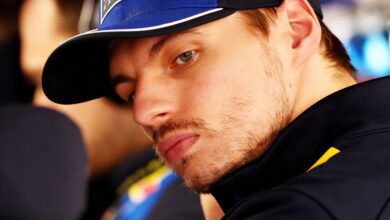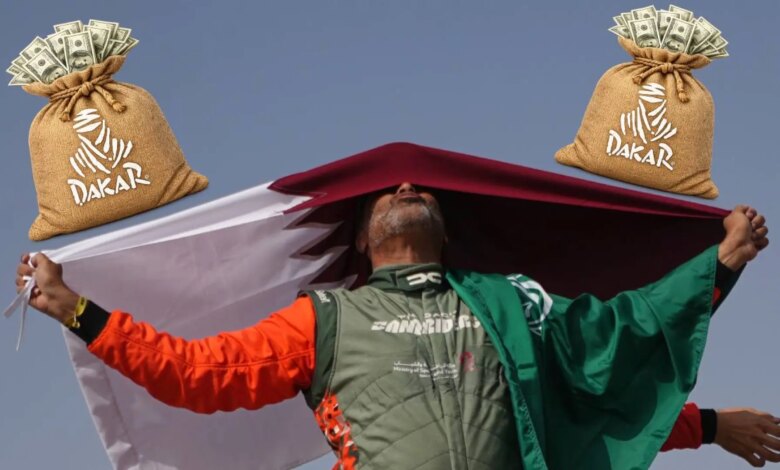
The finish of the world’s most extreme rally once again sparked heated debate. Dakar 2026 has concluded, leaving behind not just dust and exhaustion, but also a lot of questions about the fairness of the prize money. This year, the battle for the lead was intense, and the final sums awarded to the top drivers puzzled many. Fans and participants alike found the reality starkly different from their expectations: the prize money given to the winners turned out to be far more modest than one might expect, considering the scale and danger of the race.
All eyes were on names long cemented as motorsport legends. Qatari driver Nasser Al-Attiyah once again proved his unrivaled composure and experience by claiming a sixth title in the car category. Spaniard Nani Roma and Swede Mattias Ekström completed the podium, but even their success couldn’t overshadow the main question: why are the prizes in such a prestigious race so small?
Money at the Finish Line
In the car category, the winner walked away with just €5,000. For Al-Attiyah, it’s his sixth such check, but the sum is, to put it mildly, underwhelming. Second place earned Nani Roma €3,000, while Ekström took home €2,000. Even the exclusive Touareg trophy awarded to the leader fails to make up for the modest prize money. For comparison, prize funds in other top motorsport disciplines are often several times higher.
It’s especially surprising that in the T1.2 (Ultimate two-wheel drive) category, the prize money is even lower: €3,000 for first place, €2,000 for second, and €1,000 for third. Of course, drivers can earn bonuses through team contracts, but the official payouts from the organizers seem almost symbolic. Many participants admit that risking their health and vehicles for this money hardly seems worth it.
Motorcycles: different rules
The situation was completely different among the motorcyclists. The competition remained intense until the final meter, with just a two-second gap between first and second place. Argentine rider Luciano Benavides snatched victory from American Ricky Brabec, while Tosha Schareina finished third. Unlike the drivers, the motorcyclists received significantly more generous prizes.
The winner on two wheels took home €50,000—ten times more than the top car driver. Second place brought €25,000, and third received €15,000. Even the fourth- and fifth-place finishers weren’t left empty-handed: €10,000 and €5,000 respectively. The prize money covers not just the overall classification but also sub-categories: Rally2, women’s, junior, rookie, and the original Motul class.
The cost of risk
Despite the impressive sums in the motorcycle category, most participants agree: the prize money doesn’t even cover the costs of preparation and participation. The price of equipment, vehicles, logistics, and entry fees is sky-high, while the risk to life and health remains immense. Many riders admit they’re not racing Dakar for the money, but for glory, adrenaline, and the chance to make their mark in history.
Nevertheless, it’s precisely this imbalance between expenses and prizes that leads some athletes to opt out. For many teams and privateers, taking part in Dakar is more of an investment in image and potential sponsorships than a genuine way to make money. The organizers, meanwhile, uphold Dakar’s reputation as the world’s toughest race and are in no rush to increase the prize fund, even as participant costs continue to climb.
The Dakar Paradox
Dakar has long been a symbol of courage and endurance, but the financial side of the race is raising more and more questions. Why do prizes in the planet’s most dangerous and prestigious race remain at the level of regional competitions? This paradox frustrates both fans and racers alike. Every year, the debate flares up again, but the organizers have yet to compromise.
Perhaps it’s exactly this that preserves Dakar’s uniqueness: people come here not for money, but for the challenge. Yet as long as prize sums stay as they are, many will wonder—is it really worth it?
RUSSPAIN reminds readers that Nasser Al-Attiyah is one of the most decorated rally raid drivers in history, a multiple Dakar winner and Olympic medalist in shooting. Luciano Benavides is an Argentinian motorcycle racer renowned for his performances in world rallies. Nani Roma is a Spanish athlete, the only one to have won the Dakar both on a motorcycle and in a car. These names have long become synonymous with courage and relentless sportsmanship.