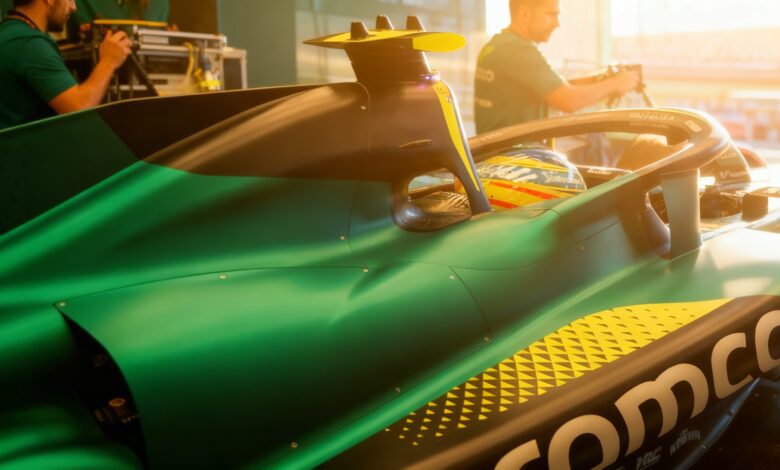
Aston Martin’s sharp decline in performance in 2026 has forced the team to look for unconventional solutions. The change in technical regulations did not bring the expected advantages, and recent races have shown that even Fernando Alonso’s consistent driving and the car’s complex, hard-to-copy chassis can’t resolve ongoing issues. With a return to the podium now seeming almost out of reach, engineers are betting on an upgraded power unit.
According to The Race, Honda has already prepared a new engine specification for the AMR26. These changes do not affect power output—regulations prohibit modifications aimed at increasing speed until the ADUO comes into effect. However, Japanese specialists have focused on improving reliability, so the team can finish races consistently instead of counting every finish as a reason to celebrate. If the FIA approval process goes quickly, Aston Martin hopes to have the updated engine ready for the Miami round, or if delayed, for the races in Barcelona or Austria.
Technical changes
Unlike previous attempts at temporary fixes, Honda’s new specification is not just a minor adjustment but a complete revision within FIA-approved parameters. The regulations allow for changes aimed at improving reliability or reducing production costs. The Japanese company must provide detailed reports to the federation on the essence and reasons for the modifications. Only after approval can the updates be introduced on track.
For Aston Martin, this is a chance to move past technical setbacks and focus on developing other components of the car. According to RUSSPAIN, the team has long been analyzing the design’s weak points, and Alonso has repeatedly stressed that the chassis’s potential is revealed gradually. However, without consistent engine performance, any gains in aerodynamics are meaningless. The new Honda specification could provide the foundation for further progress.
Impact on the season
The introduction of the updated engine won’t bring an immediate leap forward, but it will allow Aston Martin to move out of the danger zone and put an end to a string of frustrating retirements. In such a competitive environment, even a slight increase in reliability could shift the balance of power in the midfield. The team hopes that, by the summer stretch of the season, it will not only score points consistently but also close the gap to the frontrunners, especially if other technical updates are implemented in parallel.
The situation is reminiscent of a recent case when a minor part almost cost Alonso a race—Aston Martin was then forced to urgently rethink its approach to the car. You can find more details about this turning point in the article on how the team overhauled its strategy after a critical error. Now the team is talking about systemic changes aimed at preventing such situations from happening again.
Honda’s prospects
For Honda, this stage is more than just another attempt to fix shortcomings—it’s a chance to prove itself under the new regulations. The company experienced delays while developing the 2026 concept, which led to various problems. Now, Japanese engineers aim not only to address weaknesses but also to lay the groundwork for future successes. If the updates live up to expectations, Honda could reclaim its reputation as one of the most reliable power unit suppliers in Formula 1.
Honda is one of the key players in motorsport, with technology that has repeatedly shifted the balance of power in Formula 1. The company is known for its attention to detail and commitment to innovation, earning the trust of top teams. In recent years, Honda has faced criticism for engine reliability issues, but each new project is an opportunity for the Japanese manufacturer to regain a leading position. The partnership with Aston Martin opens new horizons for the brand and offers a chance to shine again at the highest level.