The arrival of the Ferrari Luce in the electric vehicle market may redefine the boundary between technological advancement and safety. The Italian brand, renowned for its speed records, is facing for the first time a situation where the car’s physical capabilities outpace those of humans. During testing, engineers discovered that the instant power delivery and rapid acceleration provoke not only excitement but also physiological discomfort for drivers and passengers. The issue proved so serious that Ferrari had to consult with NASA specialists and medical experts to determine what level of acceleration the human body can still safely tolerate.
In recent years, electric vehicles have become symbols of a new dynamic standard. Thanks to instant torque, even moderately powered models accelerate faster than many gasoline counterparts. However, the performance of the Ferrari Luce was so high that test drives revealed unexpected effects: some participants experienced disorientation and loss of balance. The reason is the absence of familiar cues that usually help people brace for acceleration. Unlike classic engines, electric powertrains deliver energy abruptly and linearly, which can be disorienting even for experienced drivers.
Pushing the Limits
Ferrari didn’t just reduce the engine power or make the throttle response less sharp. Instead, the team set out to determine where the real physiological limit lies. NASA has spent decades studying the impact of g-forces on pilots and astronauts, so their expertise proved invaluable. Medical centers helped assess how the human body reacts to sudden accelerations without prior warning. The result was a unique method for calibrating driving dynamics: engineers sought a balance between thrilling sensations and safety, ensuring the ride didn’t become a test for the vestibular system.
As a result, the Ferrari Luce boasts not only impressive specs — over 1,000 horsepower and acceleration to 100 km/h in 2.5 seconds — but also a sophisticated traction control system. Instead of simply limiting potential, the developers implemented special algorithms that make acceleration smoother and more predictable. This preserves Ferrari’s signature driving excitement while reducing the risk of discomfort for both driver and passengers.
Technology and expertise
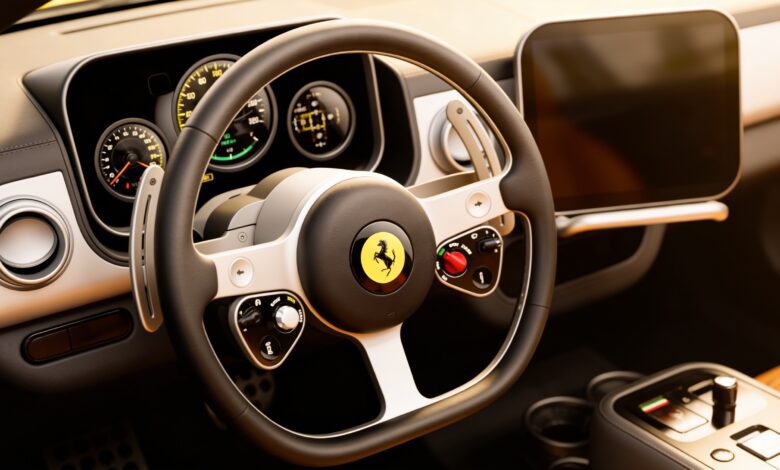
One of the key features is the use of paddle shifters, which allow you to adjust the way power is delivered. Unlike most electric cars, where the paddles control regenerative braking, in the Luce they determine exactly how torque is transferred to the wheels. This approach helps tailor the car’s dynamics to individual preferences and physical characteristics. According to RUSSPAIN.COM, such solutions could become a new standard for premium electric vehicles, where both speed and comfort are essential.
Interestingly, Ferrari is not the only company facing challenges on the edge of technology and human capability. In the world of motorsport and innovation, discussions are growing about how new powertrains affect perceptions of speed and safety. For example, a recent situation with Aston Martin sparked debates about the balance between risk and benefit — you can read more about this in the article about technical changes at Aston Martin and their associated risks.
A future without compromise
Ferrari Luce is not just another electric car setting new records. It’s an example of how engineering ambitions meet the realities of human physiology. The Italians chose not to simply raise the power figures, but took a scientific approach to make driving not just fast, but also safe. This experience could influence the entire industry: manufacturers are increasingly thinking not only about technical specifications but also about how they are perceived by drivers.
In the coming years, such research is expected to become standard among premium brands. When technology goes beyond conventional boundaries, finding new points of balance between a machine’s capabilities and the limits of the human body becomes essential. Ferrari Luce is already setting the tone in this field, and others are likely to follow.
Ferrari is one of the most recognizable automotive brands in the world, founded in Italy in the mid-20th century. The company has always been associated with innovation, speed, and distinctive style. In recent years, the brand has actively embraced electric technologies while maintaining tradition and meticulous attention to detail. The Luce model is the first fully electric vehicle in Ferrari’s history, combining power, cutting-edge solutions, and driver comfort. This move underscores the brand’s commitment to lead in a time of change while preserving its unique identity.