In 1975, Hyundai introduced the Pony—the first passenger car fully developed in South Korea. This model marked a major milestone for the country: it made personal transportation accessible to a wide audience, boosted the domestic market, and laid the foundation for the national automotive industry. The Pony was assembled mainly from Korean parts and featured a design by renowned designer Giorgetto Giugiaro. The car quickly gained popularity, captured a significant market share, and became a symbol of Hyundai’s technological independence.
Fifty years later, the company is once again embracing its roots by unveiling an entirely new model—the Hyundai Inster. This time, it’s a fully electric car which, despite its modern technology, preserves the Pony’s original mission: making advanced solutions accessible to the mass market. The Inster is produced in South Korea, underscoring the continuity and evolution of national traditions.
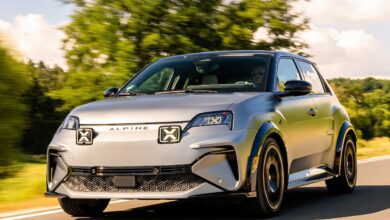
The Inster is compact and features a modern design. Engineers paid special attention to aerodynamics: the drag coefficient is 0.309, achieved through meticulous detailing, including a fully enclosed underbody and an optimized rear bumper. Compared to the Pony, the new model offers more interior space, enhancing passenger comfort and providing greater flexibility for transforming the cabin. The rear seats can be slid, reclined, and folded, while the front seats can be removed entirely to accommodate bulky items. The manufacturer notes that, if necessary, a mattress can even be placed inside the cabin for sleeping.
The Inster offers significantly more advanced technology than its predecessor. While the Pony had only basic features, the new electric car is equipped with two 10.25-inch digital displays, modern navigation with remote update capability, and a digital key that allows your smartphone to be used to access and start the vehicle. Additionally, it supports the simultaneous use of two devices via Bluetooth and features enhanced voice controls.
Technically, the Inster is available with two electric motor options—97 and 115 horsepower—paired with batteries of 42 and 49 kWh. It offers a range of up to 370 kilometers on a single charge. Fast charging enables the car to gain enough energy for 100 kilometers in just 12 minutes.
Safety was also a top priority in the development of the new model. The equipment list includes more than 15 electronic assistance systems, such as intelligent cruise control, lane keeping assist, automatic emergency braking, and parking assistant. Such features are typically found in vehicles of a higher class.