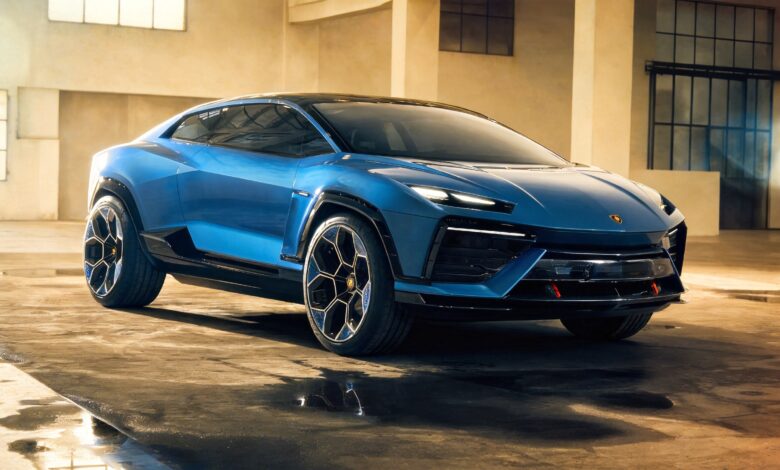
The premium car market is undergoing significant changes: Lamborghini has decided to abandon ideas that until recently seemed like a logical extension of its model range. The Italian manufacturer will not release either a compact SUV or a four-door sedan, despite clear competitor interest in these segments. Instead, the company is betting on a return to a format that once defined its identity — a two-door grand tourer with a 2+2 seating arrangement.
This move is driven not only by brand history, but also by shifts in customer preferences. According to RUSSPAIN.COM, demand for compact crossovers and sedans in the premium segment is declining, and Lamborghini clients expect more from the brand than just another trendy body style. The company believes a compact SUV would not meet their design and status standards, while a long-wheelbase sedan would not fit the Lamborghini DNA. This decision sets Lamborghini apart from players like Ferrari and Porsche, who are actively exploring new niches.
Origins and strategy
Lamborghini management, while evaluating the prospects for a fourth model, carefully studied all possible segments. As a result, they decided not to pursue mass expansion, but to focus on what truly reflects the brand’s DNA. Historically, Lamborghini started with GTs — the 350 GT and 400 GT became icons of their era and set the tone for the brand’s philosophy. The return to a two-door grand tourer is not seen as a step backward, but as a conscious move back to the roots, combining a sporty character with comfort for long journeys.
In recent years, the company has experimented with various concepts, including the Lamborghini Estoque prototype, which never made it to mass production. Now, Lamborghini is betting on a more versatile yet still exclusive format. It is likely that the upcoming GT 2+2 will be linked to the Lamborghini Lanzador concept, previously unveiled as an electric model but now possibly slated for a hybrid powertrain.
Technology and the Market
The shift to hybrid technologies for the new GT is driven not only by environmental requirements but also by real market demand. Lamborghini is not rushing into fully electric vehicles, believing that its customer base is not yet ready for such a radical change. The hybrid platform will help preserve the brand’s signature dynamics and character while adding practicality and versatility. This approach could serve as a compromise between tradition and modern trends, which is especially important for customers who value uniqueness and status.
The decision to forgo a compact SUV and a sedan is also tied to the fact that these formats do not meet Lamborghini buyers’ expectations. Unlike its competitors, the company does not aim to cover every possible segment, preferring instead to maintain its exclusivity and recognizability. This move could shift the balance of power in the market, where many premium brands focus on expanding their lineup with new body styles.
Competitors and Outlook
Against the backdrop of news about motorsport victories and changes in strategies by other manufacturers, Lamborghini’s decision appears particularly bold. For example, Antonelli’s recent success in China and the intense battle between Mercedes and Ferrari, detailed in the article about the main intrigues of the Formula 1 season, show that the supercar and premium car markets are becoming increasingly competitive. In these conditions, betting on a unique GT could be the very distinction that allows Lamborghini to maintain its leadership among luxury car enthusiasts.
In the coming years, a production version of the new Gran Turismo is expected to appear, which, according to experts, will combine the best features of classic models with modern technology. Although details remain under wraps, it is already clear that Lamborghini is not willing to compromise for the sake of mass production. The company continues to follow its own path, focusing on individuality and a return to its roots.
Stephan Winkelmann has been CEO of Lamborghini since 2020 and is known for his commitment to the brand’s traditions. Under his leadership, the company not only refreshed its supercar lineup but also revised its development strategy, moving away from mass formats in favor of exclusive solutions. This approach has helped Lamborghini maintain its uniqueness amid global changes in the automotive industry and strengthen its position among the world’s most prestigious brands.