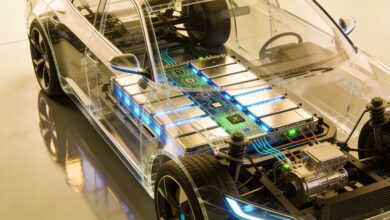
A new contender has entered the urban electric car market, instantly drawing attention — the Leapmotor T03. Developed in partnership with automotive giant Stellantis, this compact model promises not just an affordable price, but also a solid set of features. On paper, it’s an attractive proposition: a brand-new EV with a three-year warranty, seating for four, and a price tag under 20,000 euros. But is there more beneath this appealing exterior?
The manufacturer claims a 37 kWh battery, a WLTP range of 265 kilometers, and a well-equipped trim. Features include a panoramic roof, adaptive cruise control, alloy wheels, and a total of ten electronic assistants. However, as real-world experience shows, not everything is as straightforward as it seems.
Design and space
From the outside, the T03 stands out with its rounded lines and friendly appearance, creating a sense of roominess and lightness inside. Despite its modest size, the cabin doesn’t feel cramped, and the back seat works well for short trips. The trunk, however, is on the small side — from 210 to 880 liters, and the rear seat back folds down only as a single piece, limiting flexibility.
The front seats with integrated headrests seem comfortable at first, but on long trips your back starts to tire. Build quality is impressive: the hard plastics neither creak nor rattle, which is rare for a budget segment. However, ergonomics leave much to be desired. The steering wheel cannot be adjusted for reach and is set too far away, with the rim partially covering the left side of the touchscreen, which is also highly reflective. All main functions—from lighting to climate control—are managed through this display, which isn’t always convenient, especially since there’s no automatic temperature adjustment.
Electronic Driver Aids
The lane-keeping system is overly intrusive and intervenes prematurely. It could only be turned off when parked, which is puzzling. Leapmotor regularly issues over-the-air updates and there is hope this flaw will be addressed, but for now, it detracts from the driving experience.
Modern multimedia systems like Apple CarPlay and Android Auto are not supported yet, so you have to rely on the built-in navigation. It works reliably, although sometimes it unexpectedly gives voice prompts that can be confusing. Other assist systems aren’t always helpful either: the forward collision warning triggers too often and without clear reason, and the blind spot monitoring only shows indicators on the dashboard, ignoring the mirrors. On top of that, at speeds up to 30 km/h, an unpleasant pedestrian alert sounds continuously inside the cabin, quickly becoming annoying.
Performance and charging
In the city, the T03 performs well: its 95 horsepower and 158 Nm of torque are enough for confident starts and maneuvering. Acceleration to 100 km/h takes 11.2 seconds, but more important are its compact 10.3-meter turning radius and light steering, making parking and U-turns easy even in tight spaces.
However, the braking system raises serious concerns. Under heavy use, the brakes overheat quickly and lose efficiency. From 100 km/h, the car stops in 43.6 meters, and with cold brakes—in 38.5 meters. This is critical for a city car, especially when safety of passengers and others is at stake.
Energy consumption impressed: in testing, the T03 showed 13.4 kWh per 100 km, which is 18% lower than the manufacturer’s stated figure. This allows up to 262 kilometers on a single charge. However, fast charging is limited to 45 kW, so restoring the battery from 30% to 80% takes 36 minutes — not the most impressive result by 2026 standards.
Pros and cons
The Leapmotor T03 is an interesting option for those seeking an affordable electric car with a decent set of features. But the attractive price comes with trade-offs: cabin ergonomics, less-than-perfect electronic assistants, and most notably, a weak braking system. Some of these shortcomings can be addressed with software updates, but the brakes will require hardware improvements from the manufacturer.
Nevertheless, the T03 stands out for its efficiency and features rarely found in this price segment. It’s suitable for city driving, but buyers should carefully weigh all advantages and disadvantages, especially if safety is a top priority.
RUSSPAIN reminds readers that Leapmotor is a Chinese electric vehicle manufacturer founded in 2015. The company is actively developing its own technologies and collaborating with global automotive giants. In recent years, Leapmotor has expanded its presence in the European market, focusing on affordable city models with modern features and an emphasis on environmental sustainability.