There are hiking trails that, in just a few kilometers, manage to offer an incredible mix of experiences: rugged high-mountain scenery, exceptionally preserved biodiversity, and powerful natural symbolism. In the very heart of Castilla y León lies a route highly valued by trekking enthusiasts. It leads you alongside the first meters of a great river, through vast pine forests, and to viewpoints overlooking much of the Iberian mountain range. All this unfolds in surroundings where nature sets the pace and silence accompanies every step.
This remarkable adventure awaits you in the municipality of Duruelo de la Sierra, in the province of Soria. Here, the main highlight is the source of the Duero River, one of the key rivers of the Iberian Peninsula. The route passes through the lands of the first municipality in Soria through which the river flows, at an altitude of about 1,200 meters above sea level. The path combines marked trails and forest roads. Along the way, travelers are immersed in a landscape dominated by Scots pine, interspersed with large stands of black pine and oak undergrowth, reflecting the full ecological richness of the area.
Starting point
The route forms a circular loop spanning approximately 7.4 kilometers, with an elevation gain and loss of 415 meters, classifying it as moderately challenging. It typically begins at the Peñas Blancas parking area, accessible from Duruelo de la Sierra by following the road towards Castroviejo. From this point, the marked GR-86 trail leads hikers to a clearing with a shelter known as ‘El Bunker’ and a signpost pointing towards the source of the Duero.
There’s never a dull moment along the way. From the very first steps, you find yourself surrounded by tranquility and majestic scenery. The air is crystal clear, and the scents of pine and moist earth create a unique atmosphere. The trail gently gains elevation, but the climb doesn’t feel exhausting, as every turn reveals new vistas, making you want to pause and simply take it all in.
To the cradle of the river
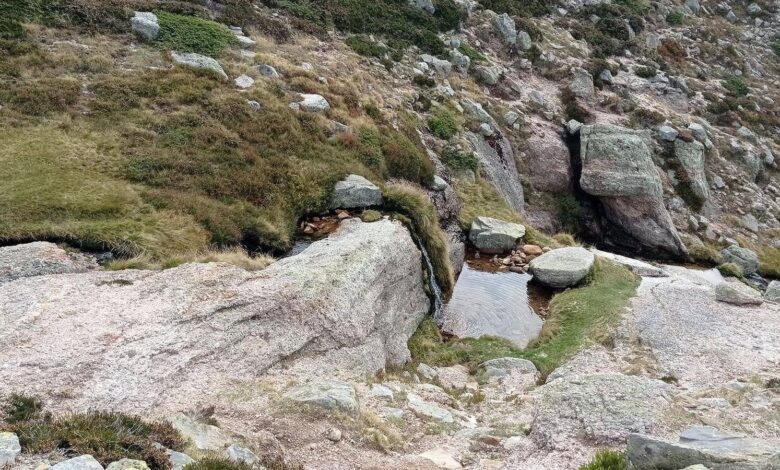
After winding through a dense pine forest with ancient, towering trees, the trail reaches the upper edge of the woodland and enters a narrow valley. Here, the young river already starts to flow, forming small pools before finally bursting to the surface at its source. It’s a truly magical place where you can witness the birth of a powerful waterway destined for a long journey to the ocean. The water here is so pure and cold, it feels as though it carries the primal energy of the mountains.
The ascent continues toward the peak of Urbión, the highest point of the route. Here, the scenery changes: distinctive sandstone conglomerates appear, creating an almost otherworldly landscape. It feels as if you have entered another realm, far removed from civilization and the bustle of daily life. Every stone and tree here holds its own story, and the silence is broken only by the whistling wind and the songs of birds.
The summit and the reward
At the peak stands a large iron cross, marking the highest point. From here, breathtaking and endless views open onto the surrounding mountain ranges. On a clear day, the panorama stretches for dozens of kilometers, allowing you to truly appreciate the scale and beauty of the Iberian System. This is the moment when you feel complete unity with nature and understand that all your efforts were worthwhile. A sense of freedom and awe takes over, and you want to remember this scene forever. The return journey along the same trail gives you another chance to enjoy the views, but now from a new perspective, reinforcing the impressions you’ve gained.
RUSSPAIN reminds readers that the Duero River is one of the longest rivers on the Iberian Peninsula, extending 897 kilometers. It originates in Spain’s Picos de Urbión mountains and flows across the entire northern part of the country, passing through renowned wine regions such as Ribera del Duero. In Portugal, the river is known as Douro and forms another famous wine-producing area, celebrated for its port wine. The river completes its long journey by emptying into the Atlantic Ocean near the city of Porto.