In the heart of the Sierra de Albarracín mountain range, where time seems to stand still, lies one of Spain’s most impressive hiking trails. The province of Teruel, often overshadowed by more well-known tourist destinations, offers travelers a truly unique experience. Here, among sheer cliffs sculpted over millennia and suspension bridges spanning emerald waters, runs a path that has become a true mecca for lovers of adventure and pristine nature.
This is the circular route of the Barranco de la Hoz, which starts near the municipality of Calomarde. This trail is considered one of the most photogenic and beautiful in the country, and for good reason. It combines light adventure with breathtaking scenery of exceptional natural value, where geology and the river have created a truly fantastic landscape.
Despite its breathtaking views and apparent difficulty, the trail is surprisingly accessible. It stretches just over 8.5 kilometers, which can be leisurely walked in about two and a half hours. With only a slight elevation gain of 160 meters and a low level of difficulty, this route is ideal for families or those just starting out in hiking, without sacrificing vivid impressions.
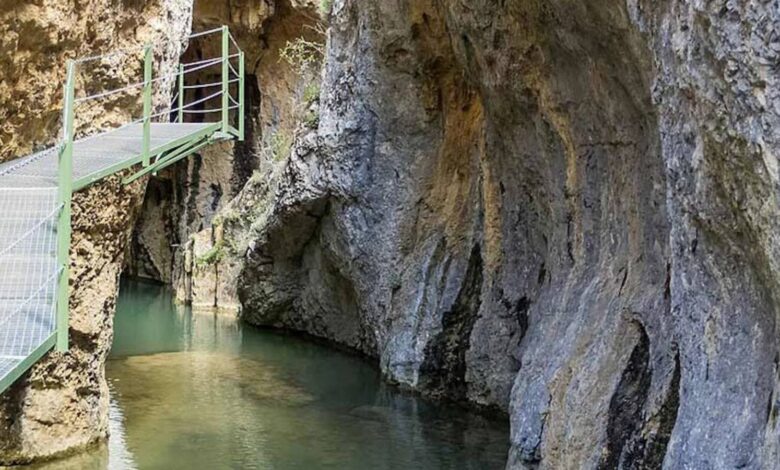
The journey begins on the outskirts of the town, where a wide path runs along towering rocky cliffs, home to vultures. Gradually, the trail narrows as it winds deeper into the gorge, and this is where the adventure truly starts. Travelers must make their way across metal walkways, staircases, and small bridges, all securely anchored directly to the rock face. This feat of engineering allows you to traverse the narrowest sections of the canyon without coming into contact with the water.
Along the way, hikers encounter unique natural landmarks, such as the Moricacho rock and the Cueva de las Albardas cave. However, the undeniable highlight of the route is the passage through Cañón de los Arcos. Here, the canyon walls close in so tightly that they almost meet overhead, and the only way forward is a suspended walkway floating above the bed of the Blanco River. Crossing this section is simply unforgettable.
After navigating the narrowest part of the canyon, the trail widens and becomes more tranquil, following the riverbank lined with lush vegetation. The path leads to historic hydraulic structures, including the Molino de las Pisadas mill, which is typically the turnaround point for beginning the return journey. The route back follows the upper edge of the gorge, offering panoramic views of the deep chasm carved by the river and a completely different perspective on the path you’ve just completed.
The route is well-marked and accessible year-round, making it one of Teruel’s main tourist attractions. This trail offers more than just a walk—it’s a true immersion into a world where nature reveals both its creative and destructive forces, shaping whimsical and incredibly beautiful landscapes.
For context, the Sierra de Albarracín is a mountain range that forms part of the Iberian System, located on the border between Aragón and Castilla-La Mancha. This region is of great hydrological importance as the sources of major rivers, such as the Tajo and Júcar, are found here. The area is renowned for its extensive pine forests and unique karst landscapes, including its famous rock formations. Thanks to its natural wealth and biodiversity, a significant portion of the territory is designated as a protected nature reserve.