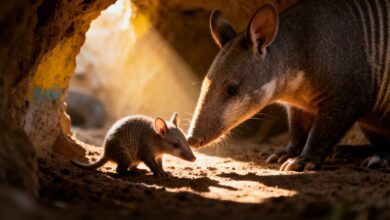
Wildlife of Iberia: Spain’s ‘Serengeti’
To experience untouched nature, there’s no need to embark on a journey thousands of kilometers away. In the very heart of Castilla-La Mancha lies a landscape strikingly reminiscent of the endless plains of Africa. Here, under the open sky, majestic deer graze, birds of prey soar overhead, and the diversity of wildlife can astonish even the most seasoned naturalists. This corner of Spain, often called the local ‘Serengeti,’ offers vistas straight out of safari books. Its vast plains, known as ‘rañas,’ once served as fields for grain cultivation and now have become home to wild deer, roe deer, and fallow deer.
This place is especially stunning in September and October, when the ‘berrea’—the deer rut—begins. Powerful stags produce trumpet-like calls to attract females and engage in fierce battles, locking antlers. It’s one of the most wild and captivating spectacles on the Iberian Peninsula, a true display of nature’s raw power.
A treasure trove of biodiversity: from imperial eagles to the Iberian lynx
This is Cabañeros National Park, one of the country’s most remarkable natural treasures. Spanning over 40,000 hectares between the provinces of Ciudad Real and Toledo, this protected area is one of the largest and best-preserved stretches of Mediterranean forest on the peninsula. It is a sanctuary for large birds of prey, including the Spanish imperial eagle, black vulture, and black stork—species that are threatened with extinction. In the mountains blanketed with dense forests of holm and cork oaks as well as rockroses, you’ll find foxes, genets, Egyptian mongooses, and the elusive Iberian lynx, a symbol of conservation efforts in Spain. The rivers Estena and Bullaque are home to otters, whose presence is a testament to the excellent ecological health of the local ecosystems.
A Sheltered Land: History of the Park and a Paradise for Birdwatchers
Cabañeros was designated a national park in 1995, but even earlier, in 1988, it was recognized as a Special Protection Area for Birds. This high level of protection allowed unique species to survive and thrive in an environment where various microclimates converge, with relic Atlantic forests, wetlands, and seasonal meadows. For birdwatching enthusiasts, this place is a true sanctuary. Nearly 200 bird species can be found here, many of which are easily spotted during hikes or from observation points. It’s no wonder that thousands of birdwatchers consider it one of the top destinations in Europe.
How to explore Cabañeros: from jeep safaris to ancient trails
One of the best ways to discover the park is by joining off-road tours, which let you venture deep into the plains and observe large ungulates up close. There are also hiking routes, such as the Boquerón del Estena trail, where you can see 450-million-year-old fossilized footprints, or the Colada de Navalrincón path for a more secluded immersion in Mediterranean woodland. Visiting is especially recommended in autumn during the deer rut, and in spring, when a burst of blooming colors transforms the landscape. But each season offers its own unique sights, whether it’s winter mists or clear summer skies.
Given its vast area, there are various ways to explore Cabañeros. Most hiking trails are well-marked, allowing visitors to enjoy the park at their own pace, though hiring a guide is recommended for a deeper understanding of its natural treasures. You can also book guided 4×4 tours, which provide access to areas closed to the general public but of great interest. The visitor centers in Horcajo de los Montes and Casa Palillos serve as the starting point for any visit. There you can get detailed information, view exhibitions, and choose the most suitable way to discover the park. The surrounding towns add to the experience with ethnographic museums and active tourism opportunities.
Visiting this national park means discovering a place that impresses with its untouched beauty and the ease with which you can observe wildlife in their natural habitat. It’s the ideal destination for families, adventure seekers, wildlife photographers, and anyone looking to escape the bustle in the serenity of endless landscapes. This corner of Castilla-La Mancha proves that sometimes you don’t need to fly to Africa to experience the thrill of a safari.