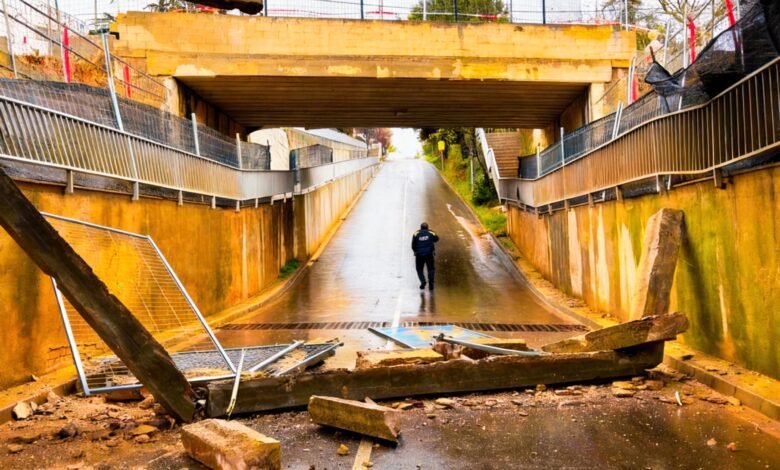
The incident in La Garriga (Barcelona) has raised concerns among those monitoring infrastructure projects in Spain. The collapse of the side section of the R3 railway line bridge onto Onze de Setembre Avenue caused no casualties, but it has triggered serious worries about the quality and safety of the ongoing works. For local residents and authorities, this event has sparked a debate about contractor accountability and oversight during the modernization of the railway network.
According to El Pais, the structure fell in an area where construction to expand the Rodalies railway line has been underway for several months. After the incident, traffic on the avenue was completely halted and pedestrian access restricted due to debris. The city’s mayor, Meritxell Budó, immediately criticized Adif, the company responsible for the project, demanding urgent explanations. She stressed that residents’ safety must be the top priority, and that unfinished works pose a risk to everyone near the site.
Response from local authorities
On social media, municipal representatives voiced frustration with how work is being managed in the area. Transport advisor Álex Valiente noted that dangerous situations had arisen before and had been repeatedly reported at meetings. According to him, warnings were ignored, ultimately leading to this incident. City officials are demanding not only explanations from Adif, but concrete measures to ensure safety throughout all stages of construction.
The situation is further complicated by the fact that train service on the R3 line between L’Hospitalet and La Garriga had already been suspended since January following the tragedy in Gelida. Temporary bus connections have not solved all the problems, while efforts to restore rail service have faced new challenges. Recently, trains between Figaró and Vic were halted again due to a large rock falling onto the tracks, further fueling frustration among local residents and commuters.
Impact on the region
The partial collapse of the bridge has become not only a technical issue but also a social one. Residents of La Garriga and neighboring areas are concerned that similar incidents may happen again if urgent action is not taken. Questions about the quality of work and oversight of contractors are growing louder, while public trust in infrastructure projects is declining. Local authorities are calling for a review of how these projects are carried out and demanding transparency at every stage.
As El Pais notes, the situation with the R3 rail line has long been a source of controversy. After train service was partially restored between La Garriga and Ripoll, only half of the trains returned to operation, and the northern section currently runs only between Vic and Ripoll. This has caused additional inconvenience for passengers and heightened tensions in the region.
Background and similar incidents
In recent years, Spain has repeatedly faced questions about the quality and safety of its infrastructure projects. For example, in 2024, after the reconstruction of a railway section in Madrid, an incident occurred involving the collapse of a temporary structure. This led to a temporary suspension of train services and a large-scale inspection of similar facilities. In Catalonia, there have previously been recorded incidents of bridge and overpass elements collapsing, especially in areas with active construction. Each such episode has sparked discussions about the need for stricter oversight and higher safety standards. Analysis by russpain.com indicates that these incidents are most often linked to insufficient supervision and haste during the implementation of major projects.