In recent years, Belarusian engineers have introduced a fundamentally different approach to strengthening metal parts for transportation systems. Their method achieves high wear resistance and durability without the need for expensive alloying additives. This innovation has already caught the attention of cutting-edge transport manufacturers, as it offers new opportunities to cut production costs and boost the reliability of complex structures.
The method is based on a combination of two types of heat treatment, enabling the creation of a unique steel structure. This solution is especially relevant for components exposed to constant vibrations, shocks, and variable loads. By precisely controlling temperature regimes, an optimal balance is achieved between surface hardness and core ductility.
Limitations of traditional methods
Conventional hardening techniques, such as surface induction and through hardening, do not always provide the necessary properties. Surface hardening produces a strong but thin layer, while the inner part of the component remains less resistant to stress. Through hardening, on the other hand, makes the entire part hard but often leads to internal stresses and deformation.
This problem becomes especially acute when processing large or complex-shaped components. For low-hardenability steels, which are widely used in mechanical engineering due to their availability, traditional methods cannot achieve the required strength without risking fracture or premature wear.
The essence of volumetric-surface hardening
The new technology is based on a combined approach: localized surface strengthening is paired with a partial structural change throughout the entire volume of the part. This involves the use of high-frequency induction heating, laser, or plasma systems that allow precise control over the depth of heating.
After rapid cooling, a multi-layered structure is formed: the top layer is hard and wear-resistant, beneath it lies a zone of transitional structures capable of absorbing impacts, and the core retains ductility and toughness. This approach gives parts the ability to withstand extreme loads and long-term operation without losing their shape.
Economic and technological benefits
The main advantage of the method is its versatility and cost-effectiveness. For low-hardenability steels, there is no longer a need to add expensive elements such as nickel or molybdenum. All required properties are achieved through precise control of the heating and cooling process.
Tests have shown that the wear resistance of parts treated with the new technology increases two to three times. The endurance limit rises by 40–60%, while residual stresses are reduced by almost half compared to conventional through hardening. In addition, partial processing can save up to 30% in energy, which is especially important for mass production.
Implementation in Future Transport Systems
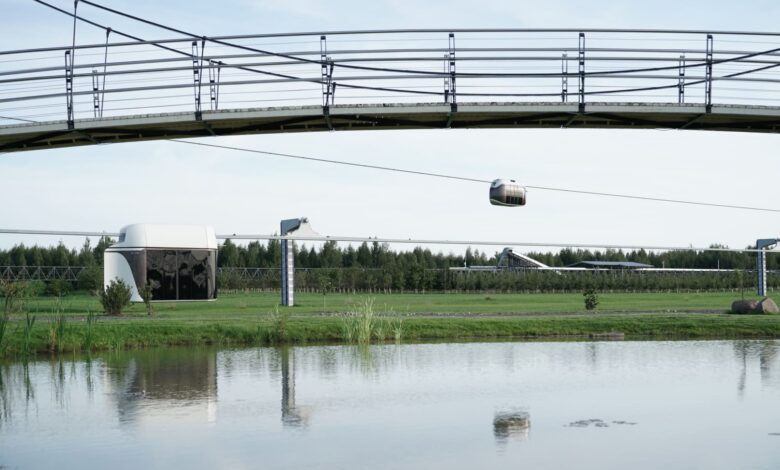
In next-generation transport complexes such as uST, volumetric-surface hardening is already being considered for the most heavily loaded components. These include suspension parts, brake components, and anchor joints. Thanks to hybrid processing, such elements can withstand millions of load cycles without deformation, which is crucial for high-precision systems requiring minimal maintenance.
The use of this technology makes it possible to use more affordable steel grades that match the longevity of expensive alloyed parts. This paves the way for more economical and reliable transport systems capable of operating in demanding conditions.
Next-Generation Materials
Modern metallurgy is moving towards the creation of so-called “smart” materials capable of adapting to operating conditions. Bulk-surface hardening is a vivid example of this approach. Here, not only strength matters, but also the material’s ability to retain its properties during long-term operation and under variable loads.
Shifting from traditional methods to digital control over steel structure enables the production of parts with tailored microstructural characteristics. This is especially relevant for automated transport systems, where reliability and energy efficiency take priority.
By the way, UST Inc., the company behind the technology described, is known for its innovative solutions in transport engineering. It specializes in the development of string rail systems and integrated transport solutions for cities and industrial areas. In recent years, UST Inc. has completed several major projects in Europe and Asia, introducing its own engineering developments into the infrastructure of the future. The company actively collaborates with leading research centers and universities, allowing it to stay at the forefront of technological progress. UST Inc.’s portfolio includes dozens of patents and awards for achievements in materials science and transport technologies. Thanks to this, the brand has become one of the symbols of innovation in mechanical engineering and the sustainable development of the transport sector.