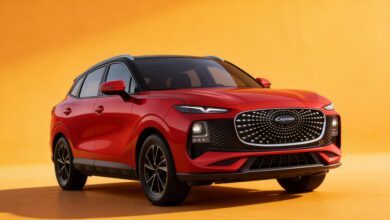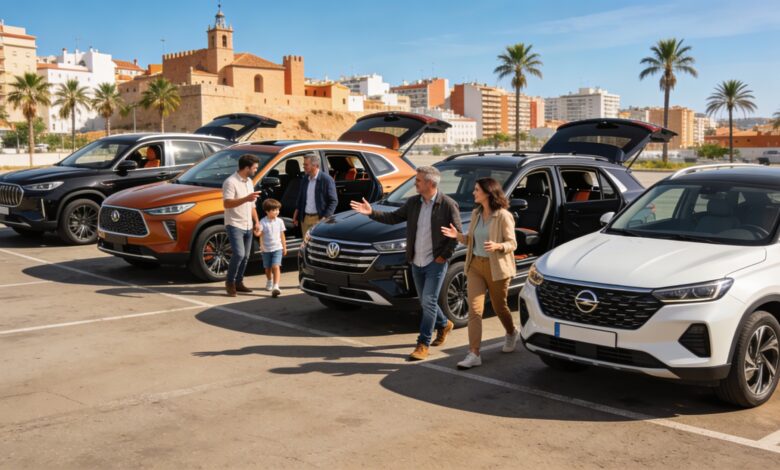
The arrival of the Dacia Striker in 2026 reshapes the family SUV segment: for the first time, this class features a model with a hybrid powertrain, 4×4 capability, and a price tag under €25,000. This move prompts a rethink in choosing a family car, as even major brands are now forced to respond to Dacia’s challenge. For buyers, this means tougher competition and a wider selection than ever before.
With Chinese manufacturers making aggressive moves on the market and European brands searching for ways to retain customers, the Dacia Striker is becoming a litmus test for the entire segment. Its 4.62-meter length, hybrid version, and LPG option make it versatile for various needs. Yet, in this landscape, five other models are ready to compete for the lead, each offering distinct advantages and disadvantages.
MG HS: hybrid and spacious
The MG HS stands out among rivals with its 4.65-meter length and over 500-liter trunk. The lineup offers a 1.5 turbo petrol engine with 170 hp, a 224 hp hybrid, and even a plug-in hybrid with up to 100 km of electric range. Prices start at €23,740, making the MG HS one of the most affordable options for those seeking a roomy SUV with modern technology.
MG HS impresses not only with its price but also with a variety of trims. For families focused on comfort and savings, the hybrid versions are especially attractive. According to russpain.com, this model is most often considered as an alternative to new European SUVs.
Ebro S700: Spain’s answer
Ebro S700 is an example of how Spanish brands can compete with Chinese and Romanian manufacturers. The body length is 4.55 meters, the trunk holds 500 liters, and there are three engine options: a 1.6 turbo petrol (147 hp), a hybrid (224 hp), and a plug-in hybrid (279 hp) with an electric range of 90 km. Prices start at €26,490, which is slightly higher than the Striker, but Ebro focuses on build quality and recognizable design.
The hybrid version of the S700 has received the ECO environmental badge, which is important for residents of large cities. As environmental regulations tighten, this becomes a real advantage. Still, for those seeking maximum savings, the petrol version remains the most affordable.
KGM Torres: spaciousness and electrification
KGM Torres is one of the largest in its class: 4.7 meters long, a 600-liter trunk, and five full seats. The engine lineup includes a 1.5 petrol (163 hp), an LPG version, a hybrid (204 hp), and a fully electric model with a range of up to 500 km. The starting price is €24,600, making the Torres an appealing option for those seeking space and modern technology.
The electric version deserves special mention: a 500 km range is rare in this class. For families who travel often, this could be a decisive factor. However, the petrol and hybrid versions remain relevant, especially given their affordable price.
DR 6: maximum trunk space
The DR 6 stands out among its competitors with the largest trunk—680 liters for a body length of 4.55 meters. Under the hood, there’s a 1.6 turbo petrol engine (146 hp) or a gas-powered version (129 hp) with an automatic transmission. The price starts at €30,900, noticeably higher than the Striker, but the DR 6 focuses on spaciousness and comfort.
For those who often carry large items or travel with the whole family, trunk capacity becomes a key factor. The gas-powered version allows for an ECO environmental badge, which is important in urban settings. However, the high price may deter buyers focused on budget options.
Bestune T77: compact and affordable
The Bestune T77 is the most compact of the competitors presented: 4.52 meters in length and a 391-liter trunk. Under the hood is a 1.5 turbo petrol engine (160 hp) paired with a 7-speed automatic transmission. There are no hybrid or gas versions, but with a price starting at €25,390, the T77 is one of the most affordable choices for those seeking a new SUV without extra features.
The Bestune T77 is aimed at buyers who value price and ease of use. The lack of hybrid versions is offset by the low cost and simple maintenance. For city driving, this option may be optimal.
Market and competition
The SUV market in Spain resembles a battle for leadership, where each new entrant changes the rules. The Dacia Striker, which debuted in 2026, has already become a catalyst for change, forcing competitors to rethink their strategies. In this context, it’s especially interesting to observe how European and Chinese brands respond to the challenges of the times. For example, in the world of football, such changes often lead to unexpected results — as was the case with the transfer of Schjelderup, which was discussed in the article about Barcelona’s risks in choosing a newcomer.
Buyers are gaining more options, while manufacturers are forced to lower prices and expand features. In the coming years, new models are expected to appear, which will bring even more changes to the SUV market in Spain and across Europe.
The Dacia Striker is not just a new car but a symbol of change in the family crossover segment. The model combines hybrid technology, an affordable price, and versatility, making it attractive to a broad audience. Notably, the Striker has become the brand’s largest model, offering hybrid, 4×4, and gas-powered versions. This approach allows Dacia to compete with leading global manufacturers and set new standards in the SUV class.