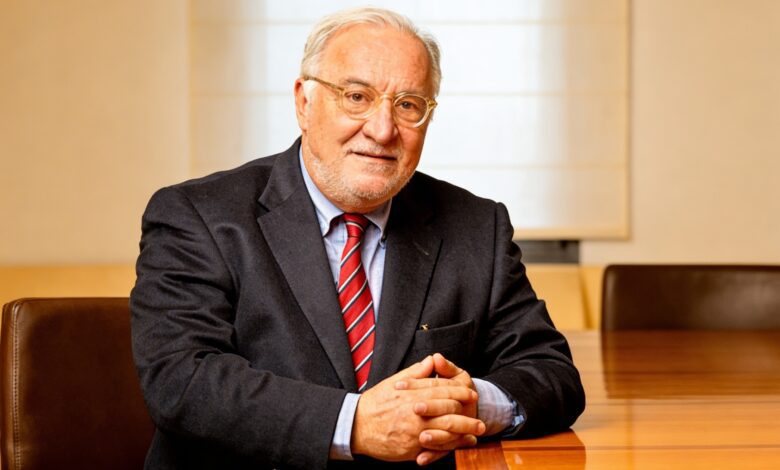
Spain’s transportation management system faces a paradox: the head of the Dirección General de Tráfico (DGT), Pere Navarro, uses three official cars—a diesel, a petrol, and a hybrid. This raises questions, as the agency actively pushes for abandoning traditional engines and tightens rules for private drivers. The situation undermines trust in reforms and increases the sense of double standards among citizens.
In recent years, the DGT and other government agencies have insisted on the need to switch to eco-friendly transportation. Restrictions on the entry of internal combustion vehicles into cities have been introduced, and owners of older cars are forced to seek alternatives. However, as noted by Libre Mercado, the DGT’s own director continues to use official vehicles with traditional engines, which leaves many Spaniards puzzled.
Official vehicle fleet
According to official data provided in response to a transparency request, Pere Navarro has at his disposal a Renault Talisman, an Alfa Romeo Stelvio, and a Mitsubishi Eclipse Cross. The first is a diesel sedan, the second a petrol crossover, and the third a plug-in hybrid SUV. All three vehicles were registered in different years, suggesting a gradual fleet renewal but not a complete phase-out of traditional engines.
The Renault Talisman was registered in February 2018, when Navarro had not yet taken his current position. This model is equipped with a 2.0-liter diesel engine, with fuel consumption in the city ranging from 4 to 5.5 liters per 100 km, and on the highway from 3.4 to 4.4 liters. The Alfa Romeo Stelvio, registered in December 2021, runs on gasoline and consumes on average between 11.7 and 12.6 liters in the city, and from 7.3 to 9.0 liters on the highway. The Mitsubishi Eclipse Cross, added to the fleet in November 2021, stands out as the only hybrid with a zero-emissions sticker, capable of traveling more than 40 km on electric power alone.
A contrast between words and actions
Despite public statements stressing the need to reduce private vehicle usage in cities, the head of the DGT continues to use three official cars. In a recent speech, Navarro emphasized that people should reach the city center by public transport or taxi, not by private car—even if it is electric. However, as reported by Libre Mercado, on the same day he arrived at a meeting in one of his official vehicles, highlighting the gap between rhetoric and practice.
The agency also openly states that the aim is a complete phase-out of fossil fuel vehicles by 2035. Nevertheless, two of the DGT director’s three official cars still run on gasoline or diesel, and the hybrid Mitsubishi requires regular charging, or else it functions like a conventional gasoline car. This approach raises questions about the consistency and sincerity of the proposed reforms.
Public response and consequences
Public opinion is becoming increasingly critical of such contradictions. Many drivers, who face restrictions and rising costs due to the new regulations, see the actions of the DGT leadership as an example of double standards. This undermines trust in initiatives aimed at transitioning to eco-friendly transport and creates the impression that the rules do not apply equally to everyone.
The situation with the DGT chief’s fleet serves as a reminder that reforms require not only legislative changes but also personal example from leaders. Until that happens, public skepticism will only grow. An analysis by russpain.com notes that such cases are becoming more noticeable as environmental requirements tighten.
Trends in the automotive industry
Amid the debate over government officials’ service vehicles, car manufacturers are continuing to change their strategies. For example, Audi recently updated the Q5, making the model fully electric, which provoked mixed reactions even among fans of the brand. More details about price changes and what premium brands now offer can be found in the article about the new compromises for Audi Q5 buyers.
Pere Navarro has served as director of the DGT since 2018 and is known as an advocate for stricter traffic regulations and the implementation of environmental standards. Under his leadership, the agency has actively promoted reforms aimed at reducing accidents and lowering emissions. However, his personal fleet often sparks discussion, as it highlights the challenges of transitioning to new standards even at the leadership level. The question of how quickly and consistently government institutions can move away from traditional vehicles remains open across Spain.